geotenerife_slide--6

Ongoing Research and Collaborations

GeoTenerife is committed to fostering valuable collaborations with local, national, and international research institutions, to both conduct valuable geoscience research in the Canary Islands but also to give our students and interns the best hands-on experience of being involved in important, publishable research projects.

We are always looking to welcome new collaborations, so if you or your company/research institution is interested in collaborating with us, please get in touch with us via enquiries@geotenerife.com
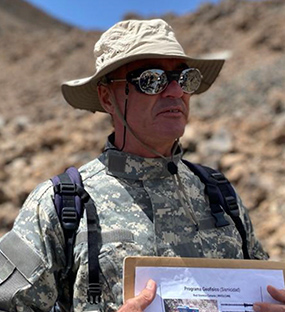
Alexis Schwartz, Volcanologist and Lecturer (GeoTenerife)

Alexis Schwartz is GeoTenerife’s full-time resident expert, Volcanologist and Geologist. He has an extensive knowledge of local outcrops, geology and volcanology and spent many years researching the islands for the local volcano monitoring institution and for his thesis at the University of Leicester. Alexis helps to organise and facilitate much of GeoTenerife’s research on Tenerife, particularly in site selection, and has also been involved with international geological research relating to the 2021 eruption on La Palma.

Matt Pankhurst, PhD (GeoTenerife)

Matt has been researching and publishing in the field of volcanology and magmatism and inventing new laboratory technology for many years, and so it is even more impressive that he is also a talented communicator who was involved in the media response to the 2021 Tajogaite eruption. Since then Matt has been leading our research department at GeoTenerife.

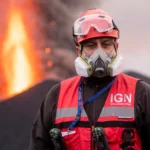
In recent years, we have been collaborating with the Canary Islands regional service of IGN, the National Geographic Institute of Spain. IGN is the legally mandated organisation that monitors and reports on volcanic and seismic activity in the Canary Islands. IGN is a member of PEVOLCA, the emergency management committee activated during emergencies. 
Itahiza Domínguez Cerdeña, PhD,

Seismologist

Itahiza collaborates with GeoTenerife through consulting on our volcanic readiness resources and social posts to ensure scientific accuracy.

Stavros has collaborated with GeoTenerife through consulting on Volcanic Readiness and La Palma resources. Stavros has also assisted in short field trips to the Tajogaite lava flow field to analyse ash logs with GeoTenerife students.

Instituto Geológico y Minero de España (IGME)

The Spanish Geological Survey provides essential resources for GeoTenerife’s research: maps, a digital library, and the catalogue for sites of scientific interest. On a more individual level, we wish to thank the following collaborators.
Nieves Sánchez, PhD

Director of the Department of Geological Hazards and Climate Change
Nieves was working as a volcanologist and researcher on La Palma during the 2021 Tajogaite eruption. Nieves has since been a key contact to give insights about the structure of PVEOLCA and emergency management.

 Juana Vegas, Senior Researcher 

Department of Geoheritage, Geodiversity and Geoconservation of the  Spanish National Research Council

Juana was a key ally for GeoTenerife during our campaign to have El Puertito established as a site of scientific interest. El Puertito has been recognised as a geological site with high scientific value, gaining 2000+ volunteers.

IEO-CSIC, Instituto Español de Oceanografia
GeoTenerife has a fruitful research collaboration with the Spanish Oceanographic Institute, co-organising the annual Vulcana Symposium on Submarine Volcanism in the Canary Islands. GeoTenerife and the Instituto Español de Oceanografía are also co-run the annual Marine Science Camp: selected students spend time assisting in critical research taking place on board the IEO’s research vessel.

Eugenio Fraile Nuez, PhD

National coordinator for marine risk at CSIC.

Alba González-Vega, PhD.

Instituto Español de Oceanografía (IEO), Spain

Pablo Gonzalez, PhD

Volcano Geophysicist, Spanish National Research Council – CSIC

Our summer GeoInterns have been involved in Geophysical surveys across Tenerife since 2021, in collaboration with Dr Pablo Gonzalez. In 2021 the GeoInterns conducted preliminary magnetometer and micro-seismic surveys of the 1705/6 Fasnia Volcano in Tenerife, and the 2022 Tenerife GeoInterns conducted micro-seismic surveys of the 18 km long Cueva del Viento Lava Tube on Tenerife.

Dr Janine Krippner, Volcanologist and Science Communicator
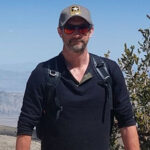
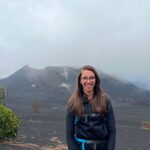
GeoTenerife and an independent researcher

Janine began collaborating with GeoTenerife in summer 2023, leading an international team working on a National Geographic-funded project to use remote sensing and ground-based field data to explore building damage and lava flow characteristics from the 2021 Volcán de Tajogaite eruption on La Palma. Also starting in summer 2023, Janine is working as part of the GeoTenerife and GeoIntern programme to assist with science communication teaching and projects.

Janine is an interdisciplinary volcanologist currently studying Mt Doom (Ngāuruhoe) and La Palma, Canary Islands, and is also researching into tsunami hazards in New Zealand with GNS. She has a PhD in Volcanology and Remote Sensing from the University of Pittsburgh, which used a range of remote sensing imagery to assess volcanic processes and topographic change at Shiveluch volcano in Kamchatka, Russia. Janine is also an avid and committed science communicator, regularly communicating her work and other volcanological information through her social media channels and global media interviews. In 2020, she also began a YouTube series called ‘Volcano Moments’, which featured accessible interviews with a range of volcanologists across the globe.

Our collaborative work aims to be valuable in better understanding how we can assess damage from volcanic eruptions and ground-truth what we see from satellites, as well as work towards our goal of providing every young geoscientist with science communication training.

Prof. Richard Brown, Volcanologist,

University of Durham, UK

Since 2021, our summer GeoInterns have been involved in an important long-term research project the Volcanologist Professor Richard Brown from the University of Durham. The research project is developing a new stratigraphy of explosive volcanic products in the Bandas del Sur in Southern Tenerife.

In particular, the teams have focused on identifying an increasing number of previously unrecognised pumice fall deposits from non-caldera-forming explosive eruptions on Tenerife in the last c.800 ka. The aim of this project is to better understand the explosive volcanic history of Tenerife, and better constrain the recurrence interval of explosive eruptions of the island.

Dr Elodie Macorps, Assistant Research Scientist
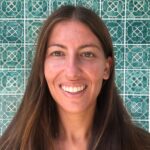
NASA Goddard Space Flight Center, USA

Elodie has been collaborating with GeoTenerife since summer 2023 as part of a team working on a National Geographic grant to use remote sensing and ground-based field data to explore building damage and lava flow characteristics from the 2021 Volcán de Tajogaite eruption on La Palma.

Elodie is remote sensing scientist with a background in volcanology who uses both radar and optical remote sensing for the detection of areas impacted by disasters and associated topographic changes, as part of NASA’s Disasters Programme. She has a PhD in Volcanology from the University of South Florida, looking at changing pyroclastic flows hazards at Calbuco and Colima volcanoes in Mexico with field and remote sensing methods.

Our collaborative work aims to be valuable in better understanding how we can assess damage from volcanic eruptions and ground-truth what we see from satellites.

Dr Arianna Soldati, Assistant Professor of Volcanology,

NC State University, USA

Arianna began collaborating with GeoTenerife in summer 2023 as part of a National Geographic funded grant to explore the damage to buildings and associated lava flow dynamics during the 2021 Volcán de Tajogaite eruption on La Palma.

Arianna is a volcanologist with a focus towards investigating lava rheology using experimental methods, with a PhD in Geological Sciences from the University of Missouri-Columbia. She is also passionate about science communication and outreach.

Our collaborative work aims to be valuable in better understanding how we can assess damage from volcanic eruptions and ground-truth what we see from satellites.

Dr Hannah Little, Lecturer in Communication and Media,
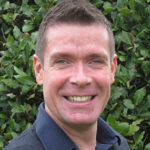
University of Liverpool, UK

Hannah began co-leading GeoTenerife’s science communication training in 2021, and draws on her wealth of experience and innate enthusiasm for the topic to deliver captivating lectures to our students. The science communication training with Hannah and Andy hope to prepare students for any future science communication challenges, and hopes to ensure that the students have the best strategies for clearly communicating scientific concepts, whether that is in industry, teaching, academia or elsewhere.

Andy Ridgeway, Science Communication lecturer,
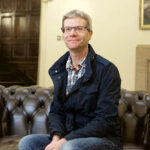
University of the West of England (UWE), UK

Andy has been instrumental in providing all of our GeoInterns with rigorous science-communication since 2021, setting them engaging assignments to teach them the do’s and don’ts of science communication. With Andy, students learn how to write blogs, news articles, and social media posts, as well as produce science communication vlogs, different types of interviews, and mini-documentaries.

Dr Steven Godby

Principal Lecturer in Geography, Nottingham Trent University, UK

Dr Steven Godby is a Principal Lecturer in Geography at Nottingham Trent University and manages the geography and environmental science courses in the Department of Environmental Sciences.  He teaches undergraduate and postgraduate students and leads the following modules:

  • Natural Hazards and Disasters

  • Drylands

  • Geographical Politics, Issues and Ethics

Steven led an NTU Geography field trip to Tenerife with GeoTenerife in December 2022, and his students researched many of the impacts of the proposed Cuna del Alma resort, which we hope to build on and deepen this summer.

Victor Melo, Presidente,

Asociación Volcanes de Canarias

Victor has a background in journalism and geoscience, and is President of the Asociación Volcanes de Canarias, founded in 2004. He continues to collaborate with GeoTenerife on projects related to the 2021 La Palma eruption, including science communication during the disaster.

Dr Catalina Arguello,

Social Psychologist, Universidad Internacional de La Rioja, Spain

Dr Catalina Arguello has a broad history of research into social dynamics of volcanic eruptions and other natural hazards, and among other resources has created a range of innovative surveys aimed at assessing knowledge and preparedness of populations at risk from different natural hazards.

Using one of these surveys related to volcanic eruptions, our 2022 GeoInterns surveyed over 70 local people both on Tenerife and La Palma to assess their preparedness and understanding of volcanic hazards.

These surveys form part of a much larger project to collect responses to similar surveys globally from hundreds or thousands of respondents, to assess trends in global disaster knowledge and preparedness, which could have major implications for disaster risk reduction (DRR) policy.

Dr José M Marrero, Volcanic Hazard and Risk Assessment Officer,
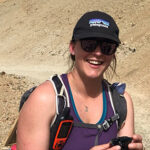
Montserrat Volcano Observatory

Dr José M Marrero is a Geographer from Tenerife (PhD in Volcanic Risk Management, ULL) who has worked for more than 18 years in risk and hazard assessment in volcanically active areas. From 2004 to 2015, he was part of the Department of Volcanology at the National Museum of Natural Sciences (CSIC, Spain).

Dr Katy Chamberlain, Volcanologist,

Liverpool University, UK

Dr Katy Chamberlain has collaborated with GeoTenerife in the organisation, teaching and research of our 2022 VolcanoCamp and GeoIntern programmes. In collaboration with colleagues both in the Canary Islands and the UK, Katy has facilitated the start of systematic vegetation surveys around La Palma, with a particular focus on the areas of historical eruptions and the areas affected by the eruption in 2021.

Jaime Coello, Hydrogeologist and Director,
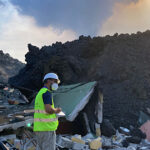
Fundación Telesforo Bravo

Jaime Coello has also been a long-time collaborator with GeoTenerife through the Fundación Telesforo Bravo, teaching our students and interns about water scarcity and the indigenous histories of the Canary Islands. Jaime has also run sample collection programmes with GeoTenerife on La Palma.

Alvaro Márquez González

Volcanologist, Complutense University Madrid, Spain

Alvaro collaborated with the 2022 GeoIntern cohort to lead a valuable teaching exercise simulating the reactivation of the Cumbre Vieja ridge and the immediate emergency response that would be needed.

This gets the students thinking about volcanic hazards across a wide range of spatial, temporal and probabilistic scales, weighing up difficult decisions with less than complete data, considering the social impacts of volcanic emergencies, whilst also exploring a variety of different data sets, hazard maps, and visualisation tools.

Dr David Foster,

Geologist, University of Florida, USA

David began his collaboration with us with the 2022 GeoIntern cohort to collect samples from the 1585, 1949, and 2021 lava flows in La Palma. The research plans to analyse these samples in a new XRF Spectrometer at the University of Florida using a novel technique to analyse the differential physico-chemical weathering of these samples, with a view towards understanding the processes affecting the development of bio-available compounds from lava flows.This research is both relevant to modern-day scenarios but also the establishment of the very first life on earth, as similar processes may have been important there.

Pedro Dorta Antequera, PhD

Geography and History Department of the University of La Laguna

Víctor Onésimo Martín Martín, PhD,

Associate Professor and Group Leader at the University of La Laguna

Geoff Kilgour, PhD

Senior Volcanologist at GNS Science

Geoff earned his PhD from Bristol University and has been a geologist at GNS Science since 2002. Geoff collaborated with GeoTenerife alongside Janine Kripner to analyse the La Palma eruption as an analogue for a potential eruption in the Auckland Volcanic Field.