

Urgent events covered by GeoTenerife. Learn more about what is happening and why residents are protesting.
Why are there protests?
Tourism in the Canary Islands has surged post-pandemic, with over 14 million foreign visitors in 2023—more than Brazil and Australia combined. Including 2 million Spanish visitors, this influx overwhelms the islands’ 2.2 million residents. Despite €1.17 billion in hotel investment in 2023 (the highest in Spain), most tourism income (70%) flows abroad. Locals face low wages (€1,200/month on average), soaring rents, and widespread poverty—one-third are at risk of social exclusion, and 65% struggle to get by. Frustrated by unchecked development and environmental degradation, Canarians have taken into the street. A fourth large-scale protest will be held in April 2026 which we are covering here on Urgent events.
Canarias Palante, a participatory process for a change of tourism model, released a report with 80+ measures for systemic change in the economic model. The measures range from decarbonisation to democratic water management. The report results from the analysis of their year-long public consultation process with 75 Canarian environmental platforms and the public,.
‘The Canary Islands have a Limit’ is an umbrella platform for protesting against the unsustainable tourism model of the Canary Islands, which is eroding the environment, infrastructure and culture of the islands. The ‘Canarias Tiene Un Límite’ platform is used by multiple activist groups, including Greenpeace, Ecologists in Action, Canarias Palante, and ATAN. The movement focuses on all the Canary Islands, especially Tenerife, La Palma, and Gran Canaria, to demand systemic change.
Key events
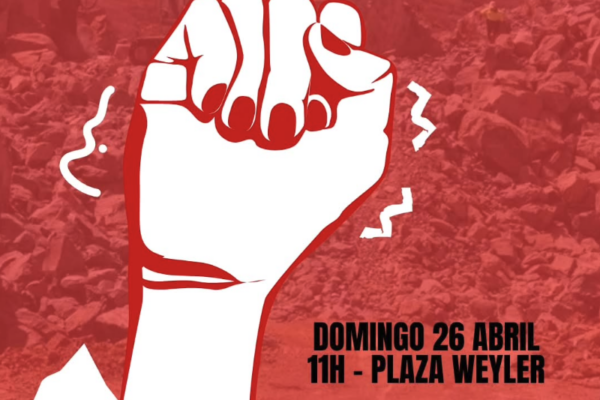
9th April 2026
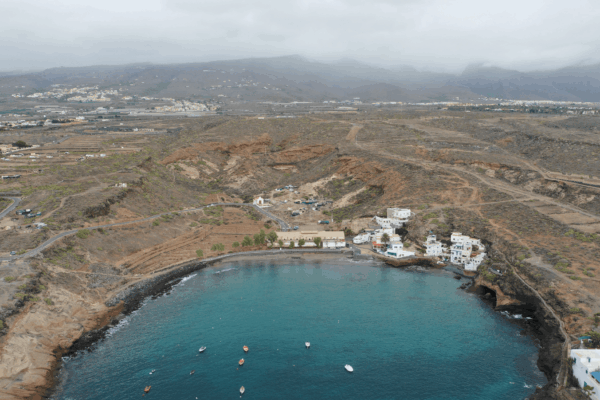
Court halts part of construction works at controversial Cuna del Alma project
A court ordered the suspension of part of the construction works at the Cuna del Alma project, reinforcing legal concerns over its environmental impact and compliance with regulations, and marking a major turning point in the ongoing judicial dispute surrounding the development.
18th May 2025
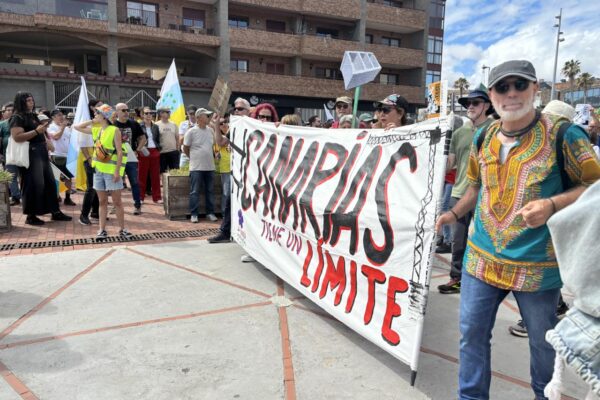
3rd Large Scale Protest on 18th May
GeoTenerife attended both the protests in Santa Cruz, Tenerife and Las Palmas, Gran Canaria where thousands of people protested the tourism model. Many different groups were represented in the demonstration, showing how this is impacting all areas of society.
13th May 2025
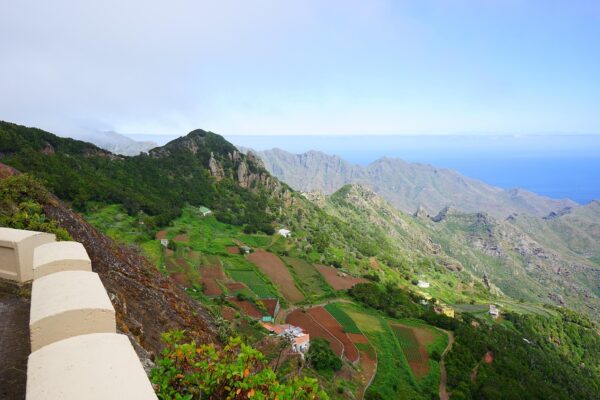
'Daily cap' of visitors of the Anaga mountains
Tenerife council approved a daily cap on visitors to northern areas, specifically Anaga Rural Park, to protect the island’s natural heritage. The new motion will restrict tourist access to areas of the island with the aim of more sustainable tourism managment (Birmingham mail, 2025). Image by Hans from Pixabay.
1st February 2025
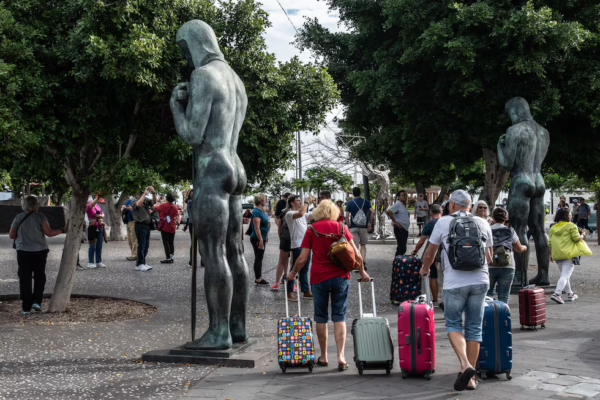
Despite the new regulations the number of tourist apartments have grown
The number of tourist apartments in the Canary Islands surges by 21% following announcement of new regulations. The number of registered tourist apartments in the Canary Islands has grown by 21% since the government announced plans for new regulations, El País (2025). Thus raising concerns over the already stressed housing market and local affordability. Image courtesy of Rafa Avero, sourced from El Pais.
29th November 2024
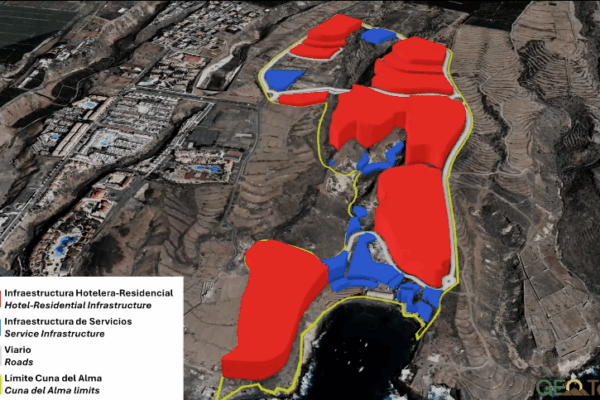
Salvar La Tejita has filed a environmental complaint against the Cuna del Alma project
Salvar La Tejita has filed a complaint with the Environmental Prosecutor’s Office due to the damage caused by the continuation of the Cuna del Alma construction works in Puerto de Adeje. Bulldozers have been excavating within the Cardonal-Tabaibal habitat of El Puertito, home to the largest population of sad viborina and two archaeological sites (Salvar El Puertito, 2024). This complaint was filed ten days after a young man chained himself to one of the diggers on the Cuna del Alma site, causing the construction works to be temporarily suspended. After several hours of this protest, he voluntarily came off the digger and was arrested (Salvar El Puertito, 2024).
20th October 2024
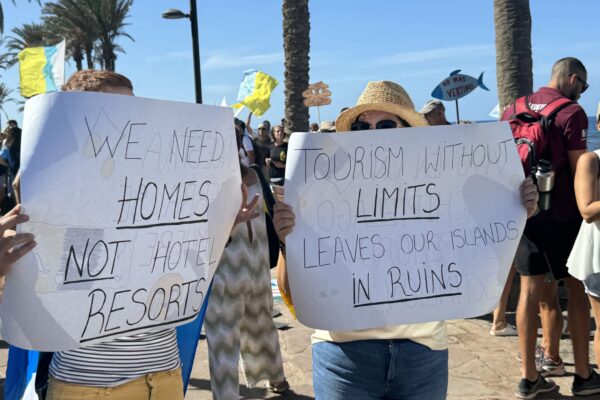
The second large-scale demonstration
Six months after the record-breaking demonstration on April 20th thousands returned to the streets for #20-O. Despite many political comments agreeing with the sentiment of earlier protests, activists complained no comprehensive measures have been implemented. Instead of the hotel moratorium they called for, several new luxury complexes have been given the green light. The Tenerife president fast-tracked an ``eco-tax`` but protesters say it's an entrance fee to Masca Gorge, not the global tourist tax they are fighting for. Further anger was stoked as the Cuna del Alma project was given official building permits. Local press put the number of protesters at 8,000, but our drone shots point to around 30,000 in Playa de las Américas. Photo credit Adriana Ariza Pardo MarineSciCamp student 2024
21st September 2024
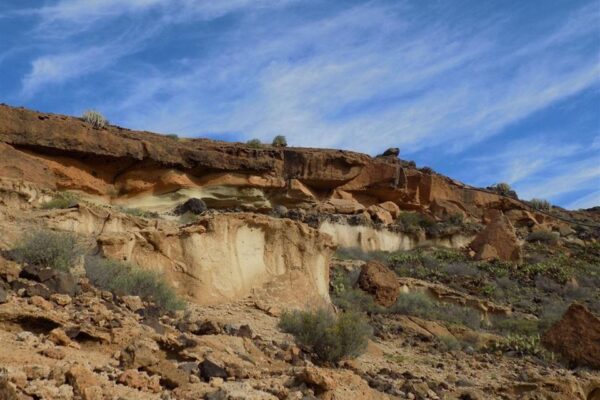
Puertito de Adeje becomes a site of geologic interest
Puertito de Adeje becomes a site of geologic interest by IGME Through the collaborative research campaign between GeoTenerife and GeoTenerife affiliated students, international researchers, and local experts we were able to demonstrate the geological importance of Puertito de Adeje. The outcrops of the ignimbrite in this location record a type of rare volcanic activity and are of great importance for understanding and mitigating volcanic risk in possible future explosive eruptions in Tenerife. Over 1000 residents have volunteered to sponsor this rock through IGME 'Adopt a rock' initiative. Read more here:
20th September 2024
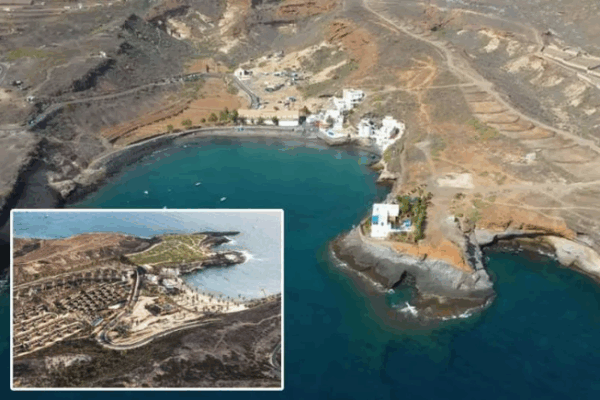
Cuna del Alma project resumes construction
The Adeje City Council officially granted the building permit for the Cuna del Alma tourism project, allowing construction to begin in El Puertito, south of Tenerife. The mayor of Adeje, José Miguel Rodríguez Fraga, set an 18-month deadline for the start of construction and a 48-month timeframe for the project's completion. Image sourced from Canarian Weekly (2024).
11th August 2024
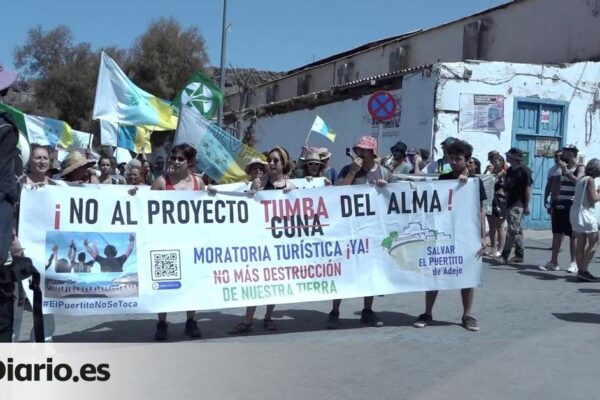
Protest in El Puertito.
On the 11th of August, Salvar El Puertito organised a protest at El Puertito. Protestors stripped the metal fence erected around the Cuna del Alma construction site. Although there has been no immediate response from the Cuna del Alma developers, the president of Tenerife Cabildo, Rosa Davila, was interviewed the day after the protects in El Puertito and said “It is essential to review the current economic model so that the benefits of tourism revert to the citizens.” However, in response, employees, allegedly tore out the protected species Echium Triste on the 13th of August, in response to the protests. This was later denounced by the activist group Salvar La Tejita. Photo credit El Diario (2024).
24th April 2024

Parliament discuss mitigating the impacts of tourism
The plenary session of the Parliament of the Canary Islands voted on April 24th regarding multiple measures to mitigate the impacts of the mass-tourism model on the economy, environment, and society. Only one of these proposals was approved: measures to ``promote the recovery of island and municipal planning``, and to ``promote limitations and fees for non-residents to access protected natural areas``. The latter has informally been referred to as an ``Eco-tax``. This ``Eco-tax`` has been controversial due to worries it will discourage visitors and because it does not charge all tourists who visit the islands but tourists who visit the areas of natural beauty. Photography by Flikr Parcan.
20th April 2024
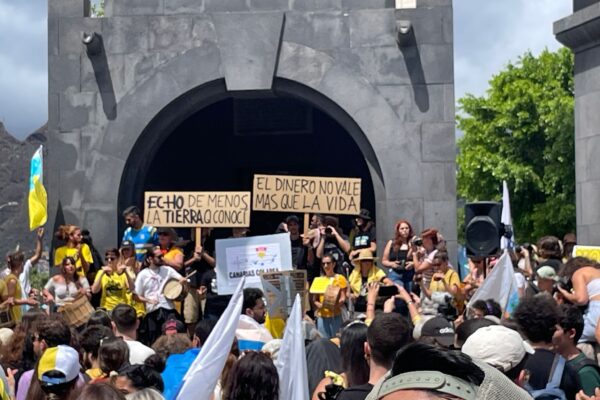
The first large-scale demonstration
On April 20 2024, some 200,000 Canarian people took to the streets to demonstrate against the unsustainable tourism model in the Canary Islands. Activists pointed to over-development putting limited resources under strain, the lowest wages in Spain, and a lack of affordable housing for locals. Despite record tourism numbers, a third of Canarians are at risk of poverty and social exclusion, with some living in cars or caves despite having a job. They called for a moratorium on more hotel buildings and an immediate stop to two contentious luxury resorts in Tenerife: La Tejita and Cuna del Alma. Six people went on hunger strike, and the protesters adopted the ``Canarias Se Agota`` mantra (The Canaries are Running Out). Photo credit Sharon Backhouse, Director of GeoTenerife.
Timeline of News articles and social media
Cite us
Research by Sergio P. Alfaya, GeoTenerife Collaborator, Isabel Queay, Volcanostories Researcher, and Ajay Wynne Jones, VolcanoStories Content Coordinator