Genesis is an EU Horizon-funded project that will research and demonstrate Nature-based Solutions (Nbs) to improve water supply/infrastructure/storage, across Macaronesia. This bootcamp is a key outreach activity of the GENESIS project, bringing international student talent to the Canary Islands to contribute to the active research of hydrogeology/hydrology of the Genesis NBS sites. You will learn and work alongside experts in the field, and the data and the conclusions you collect will inform the implementation of the NBS.
The boot camp would be particularly interesting to students or practitioners interested/involved in water management and adaptation to climate change, interested in safeguarding fresh water for the future and developing their academic portfolio and network.
In the 3rd and 4th week of the GeoIntern programme, you will be transferred to La Palma, ‘the beautiful island’. In La Palma, you will meet and learn from hydrologists, geologists, plantation farmers, and water management experts to engage with the spectrum of stakeholders of water on the island. During your trip to La Palma, you will visit and study 4 Genesis ‘demonstrator’ sites, currently at different stages of construction.
Barlovento

Using volcanic rock layers to control the rate of water abstraction
Trasvase

Creating a 3D model of the geology and water storage underground
Tenisca

Creation of a new dry gallery and infiltration monitoring wells
Angustias
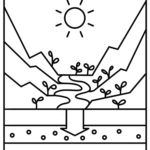
Multipurpose approach to reduce the risk of marine and groundwater contamination and floods.
The programme this summer will include:
-
Technical visits to demonstrator sites for a deeper understanding of the Genesis Project and the hydrology of the island.
-
Training to use specialised hydrology equipment, such as sounds, piezometers and methods for measuring water quality.
-
Workshop sessions on subjects such as: Communicating hydrological uncertainty to non-specialists, social media engagement, and ‘predicting’ local climate change.
-
Agricultural site visits, including banana, avocado, and other plantations, to understand the impact of reduced water resources on the communities of the island.
-
Producing a group research poster to be displayed at the VI VulcanaSymposium in Autumn 2026.
Your research will strengthen the consortium’s ability to effectively implement nature-based solutions well-integrated into communities, and any resulting papers or resources will credit your work.
Our collaborators in running this training camp:
-
AIM – The Association for Research of Macaronesia (AIM) is a non-profit based on the island of La Palma, Canary Islands. AIM aims to foster a research model in the Macaronesian region that is in line with regional priorities and forward-looking, as in the GENESIS Project.
-
Consejo Insular de Aguas La Palma –The Consejo Insular de Aguas de La Palma is an autonomous body attached to the Cabildo Insular de La Palma, which is responsible for the management, planning and administration of the island’s water resources.
-
LPRC – Independent, internationally active think-tank headquartered on Isla de La Palma, Canary Islands, Spain.
-
Luca Graziano – 2025 Genesis training bootcamp scholar and Research Technician in marine microbiology at IEO-CSIC of Santa Cruz de Tenerife.
Previous Genesis training bootcamps
La Palma’s future water management (2025)
Stephanie Sánchez¹, Ronan Brennan², Amelia Lee³, Luca Graziano⁴, and Chase LaGro⁵
1 University of Puerto Rico at Mayagüez
2 University of Manchester
3 University of St Andrews
4 University of Naples Federico II
5 Florida International University
Abstract
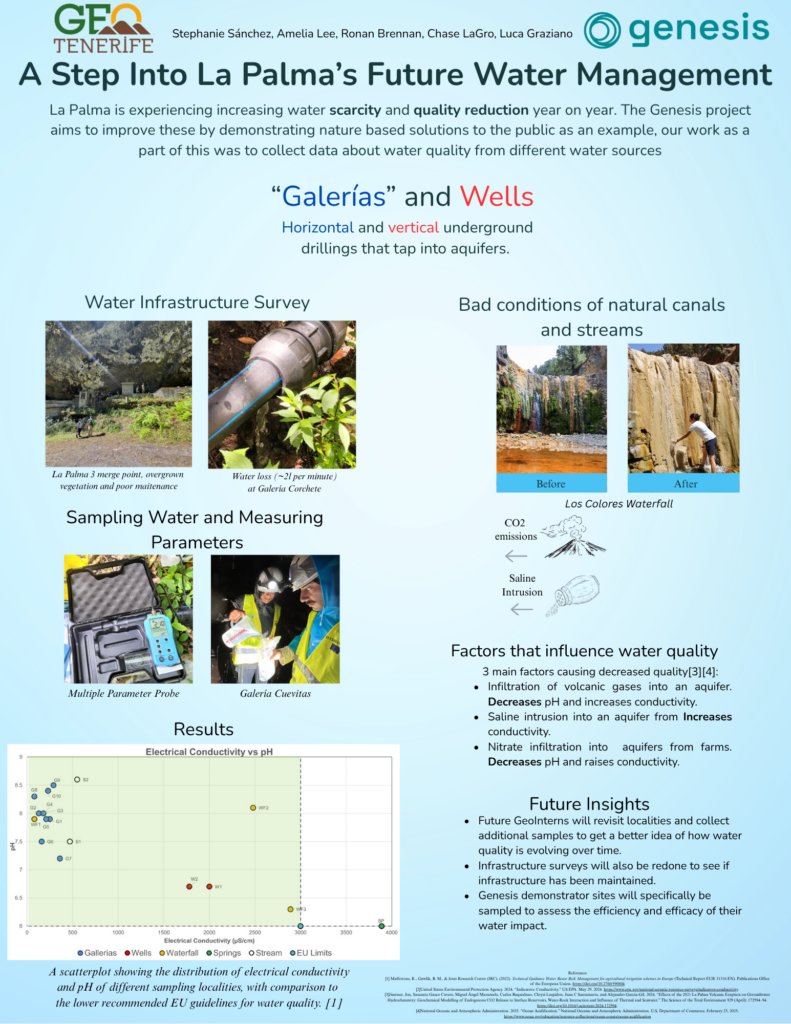
La Palma is experiencing water scarcity and quality reduction year on year. The EU funded Genesis project aims to improve these issues by demonstrating small scale nature-based solutions to the public. Our work with Genesis was to collect and perform on-site testing of water samples within and around different pieces of public and private water infrastructure, as well as surveying the general maintenance level. Our findings show that of the sampled sources, galerías (water galleries) maintained a higher water quality than wells, with lower temperatures, pH values closer to the recommended EU guidelines and lower conductivities. This difference is caused in well aquifers through three separate processes: volcanic gas intrusion, lowering pH and increasing conductivity; saline intrusion, increasing conductivity; and nitrate infiltration from agricultural runoff, lowering pH and increasing conductivity. The maintenance levels of the water infrastructure were very poor, with many galerías being completely overgrown with vegetation and run-down. In the future, successive years of the Genesis HydroCamp will collect additional data to get a better understanding of the hydrology of La Palma. Therefore enabling better informed water management strategies on the island.

This project has received funding from the European Union’s Horizon 2023 green research and innovation programme under grant agreement Nº 101157447.