
VolcanoStories Blk

El proyecto VolcanoStories de GeoTenerife es una iniciativa multimedia de comunicación científica que crea recursos personalizados sobre la actividad volcánica, la preparación ante emergencias, la reconstrucción y el turismo sostenible en las Islas Canarias. Colaboramos con instituciones líderes a nivel local, regional y nacional a través de nuestros programas de formación únicos GeoIntern, VolcanoCamp y MarineSciCamp, dirigidos a estudiantes y académicos de todo el mundo.

La Palma infrastructure reconstruction, struggles of the residents, and the eruption

Protestas contra el turismo en masa, resorts insostenibles y movimientos activistas

Riesgo volcánico, planes de emergencia, comunicación y preparación en las Islas Canarias

NUEVO: ARTÍCULO DE OPINIÓN PUBLICADO EN VOLCANOSTORIES

Artículos cortos y fáciles de leer, relevantes para los residentes de las Islas Canarias. Disponibles en español y en inglés.

Cuna del Alma, el Aula Marina, y las Tortugas

Las Islas Canarias se promocionan como un paraíso de biodiversidad y turismo sostenible. Pero la historia del Puertito de Adeje SeaLab revela una realidad muy distinta: un patrón en el que las autoridades locales explotan las iniciativas de restauración ambiental para generar relaciones públicas

Cuna del Alma, the SeaLab and the Turtles

The Canary Islands are marketing themselves as a paradise of biodiversity and sustainable tourism. But the story of the Puertito de Adeje SeaLab reveals a very different truth: a pattern in which local authorities exploit environmental restoration initiatives for public relations, only to erase them

NUEVO: Actualizaciones de la reconstrucción de la palma

La Palma Reconstruction – October 2025

Canary Islands 'Volcano Law' published - Subsurface pressure tests in Puerto Naos - La Palma awarded for ISVOLCAN health project - Latest Reconstruction Statistics Published - Results from Radon exposure tests in Puerto Naos - Tajogaite Reconstruction Conference in November - LP-211 road reopens - G

La Palma Reconstruction – September 2025

Volcanic emergency drill takes place in Tenerife - New internal 'map' of Tajogaite - Marine recovery continues - Results published on health impacts of the eruption - Progress of National Volcanology Centre - 60% income tax discount delay - LP-2 reconstruction progress - Volcano Law approved by Cana

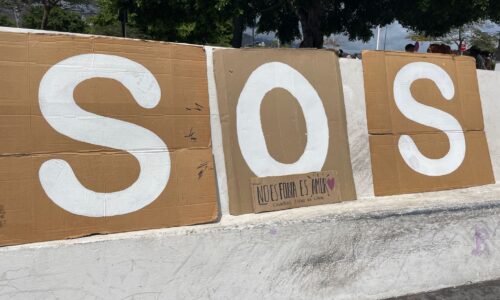
Eventos urgentes: protestas del 18m

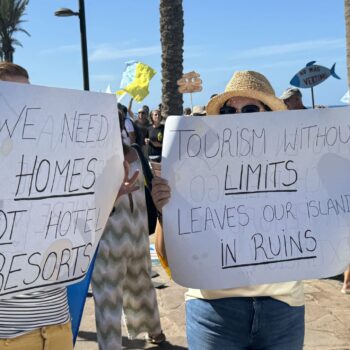
Frustrados por el desarrollo descontrolado y la degradación ambiental, 200.000 canarios protestaron en abril y varios miles más lo hicieron nuevamente en octubre de 2023, exigiendo un modelo de turismo más sostenible que priorice las necesidades locales y proteja el frágil ecosistema de las islas. Se está organizando una tercera protesta a gran escala para mayo de 2025, la cual cubriremos aquí en Urgent events.
WhatsApp Image 2024-04-24 at 13.12.44

Cuna del Alma, el Aula Marina, y las Tortugas

Las Islas Canarias se promocionan como un paraíso de biodiversidad y turismo sostenible. Pero la historia del Puertito de Adeje SeaLab revela una realidad muy distinta: un patrón en el que las autoridades locales explotan las iniciativas de restauración ambiental para generar relaciones públicas

Cobertura de las protestas

Nuevo: El Puertito de Adeje y la Cuna Del Alma

Cuna del Alma, el Aula Marina, y las Tortugas

Las Islas Canarias se promocionan como un paraíso de biodiversidad y turismo sostenible. Pero la historia del Puertito de Adeje SeaLab revela una realidad muy distinta: un patrón en el que las autoridades locales explotan las iniciativas de restauración ambiental para generar relaciones públicas

Cuna del Alma, the SeaLab and the Turtles

The Canary Islands are marketing themselves as a paradise of biodiversity and sustainable tourism. But the story of the Puertito de Adeje SeaLab reveals a very different truth: a pattern in which local authorities exploit environmental restoration initiatives for public relations, only to erase them

FORO PARA PREGUNTAS SOBRE VOLCANOSTORIES

¿Quieres hacernos llegar alguna preocupación? Nuestro foro es un espacio para cualquier pregunta, reflexión y comentario. 

Please or Register to create posts and topics.

The conversation: Netflix’s La Palma – The ethics of keeping the fictional, fictional

Opinion piece

Written by Ben Ireland

PhD candidate studying Volcanology at Bristol University and Science communicator at GeoTenerife who has been involved in studying the 2021 Tajogaite eruption and subsequent the reconstruction and activism for residents

Netflix’s disaster miniseries La Palma was released on 12 December 2024. The Norwegian production secured a spot on Netflix’s top 10 non-English series in just five weeks and was the most-watched between December 19 and 25 across all streaming platforms. However, it has received local criticism for its plot and the timing of its release, as La Palma is still recovering from the 2021 eruption on the island. It asks questions about filmmaking ethics, especially when real places and phenomena are involved.

The series follows a Norwegian family holidaying in La Palma, as volcanic unrest on the island intensifies as the whole island begins to crack in two, just out of their view.  When the volcano erupts, they must escape to the neighbouring island of Tenerife, where a purported ‘safe’ zone exists that will shelter them from the giant mega-tsunami waves when they hit. In the end, *spoilers*, they all survive by the skin of their teeth. Discounting the landslide and mega-tsunami, the majority of the remaining ‘science’ in the film poorly reflects reality, from the volcanic monitoring techniques and explanations, to the climate change reference for the worsening of the ‘crack’ on the island, to the fact that someone could survive a mega-tsunami impact in half a submerged plane fuselage! 

Neflix’s La Palma, and the  massive eruption, landslide and ‘mega-tsunami’ on the island portrayed, is completely fictional, as pointed out by local volcanologists at the Spanish National Geographic Institute, IGN. To a geoscientist, that is obvious. Many aspects of this apocalyptic scenario on La Palma, which emerged and was popularised in the early 2000s, have subsequently been debunked by scientists across many disciplines, including the US Geological Survey. This is especially true for its most far-reaching impacts, that would have allegedly seen waves of up to 25 m high along the east coast of the Americas. However, perhaps because of its scale and notoriety, the idea remains of a ‘mega-tsunami’ in the mainstream conscience and has become a thorn in the side of many residents and authorities on La Palma. 

La Palma presents itself in a fairly serious, matter-of-fact way; Opening with a clip of a professional-looking documentary footage complete with a scientist (who happens to be the author of the original Mega-tsunami study and also the BBC documentary) priming the audience with a summary of the debunked "hypothesis' of how the mega-tsunami will happen and how terrible the impacts will be. 

After the 2000 BBC Documentary Mega-tsunami: Wave of Destruction popularised the theory, there were reports of tourist numbers dropping, flights being cancelled and even foreign nationals selling their homes on La Palma and moving away. More recently during the recent 2021 Tajogaite eruption on La Palma, scientists on the island were inundated with distressed messages from concerned citizens outside the Canary Islands as far away as the USA. Already since the miniseries’ release, volcanologists have felt compelled to once again reiterate that this 'Mega-tsunami' theory has been debunked given how damaging it has been in the past. In this climate, serious ethical questions should be raised as to why a drama profiting from this fear and controversy should be commissioned and aired, and the knock-on effects it could have for the island.

Entertainment media does not exist in a societal vacuum, and there is a strong element of social responsibility and ethics, especially when covering real places and referencing real events, and a failure to consider this can directly impact people and places. Another element of this in the case of La Palma is that despite being completely fictional, the series inextricably links itself to reality and the 2021 eruption in La Palma. There are frequent verbal references to the 2021 eruption, all the non-CGI footage of the volcano and lava flows comes directly from the 2021 eruption and the associated volcanic cones, and even some of the news footage of the fictional eruption is taken directly from reporting on the 2021 event. To the average viewer, the drama risks implicitly linking the mega-tsunami theory with scientific reality on La Palma, sowing seeds for a repeat of the fallout from the 2000 BBC documentary, with the social and financial impacts from tourism losses.

Obviously, stretching scientific truth and the use of fictional apocalyptic scenarios is commonplace in the disaster media genre, and on its own is not particularly damaging or unethical. However, the context that these productions are grounded in is key to the ethics and sensitivities behind how accurately relevant science and scenarios should be portrayed. In productions grounded in real contexts and places such as La Palma, especially given the notoriety of the mega-tsunami theory and the well-documented and referenced 2021 eruption, getting the scientific facts right is necessary as to not risk misinforming the audience. 

The science in La Palma largely gives the impression that the volcanologists can ‘predict’ all sorts of things from instantaneous gas ‘emissions’, the style of the eruption (ash or lava) based on all sorts of different signals, and even the eruption itself. Not only are the referenced tools and measurements all wrong for the ‘predictions’ they are used to make, but the very notion of ‘predicting’ a volcanic eruption is misleading. In a similar way to the weather, volcanologists cannot predict eruptions, but in some cases, they can forecast them over a period of days, weeks or months, with significant uncertainties. This distinction between predicting and forecasting is especially important on La Palma, where perhaps the biggest controversy of the 2021 eruption centres around the lack of evacuations and alert level increase prior to the eruption, and if the scientists could have known the eruption was ‘imminent’. There is still a move on the island to condemn the authorities for the lack of warning, and it would not be the first time scientists have faced consequences for not ‘predicting’ geohazards.

The final element of the miniseries that raises ethical questions is the timing of its release. La Palma is still only very slowly recovering from the 2021 eruption, in which over 1,300 homes were destroyed and over €1 billion in damage was caused. Three years on from the eruption, there are many living in precarious circumstances or who have yet to receive state aid for their destroyed homes. Around 30% of tourist beds have been lost, and flights are being cancelled as tourism has fallen well below pre-eruption levels.

The continuing struggles on the island to recover after the 2021 eruption, the most destructive in over 500 years, have been well documented by many including myself and colleagues at GeoTenerife through the #VolcanoStories project and Lava Bombs documentaries.  La Palma is an incredible tourist destination, known as La Isla Bonita (The Beautiful Island) for a reason, specialising in natural scenery and local experiences, but now more than ever requires a tourism boost that can help further its recovery, rather than a series which may do more harm than good in that respect. The producers claim that the series will promote La Palma and business groups are in support, although the negative responses from local citizen groups show those affected strongly disagree with the series’ publication. Multiple comments from locals on social media quip that the only good thing about the series are the island’s beautiful landscapes.

There are lessons to be learnt here regarding the ethics of disaster filmmaking. As a scientist, my favourite types of disaster films are (predictably) those that get the science right, as well as being engaging and focus on both the human and physical sides to disaster. The brilliant In the Path of a Killer Volcano, following the 1991 eruption of Mt Pinatubo comes to mind. However, there is also equally space for ‘what-if’ films that thrive on morbid curiosity, throwing out the scientific rulebook, such as 2012, GeoStorm, and others. Where films such as La Palma try to tread the line between these endmembers, especially where they have a local context or sensitivities around certain disasters, it becomes very difficult to avoid a degree of scientific misinformation. When this misinformation could directly impact local communities, the production of such a film becomes unethical. 

"When this misinformation could directly impact local communities, the production of such a film becomes unethical." Ben Ireland 

As others have argued, one opportunity is to work alongside scientists to help get the science right. Additionally, many dramatic, inspirational and most importantly true stories have emerged from the 2021 eruption on La Palma, and one of the best ways to promote the island’s recovery through film could be to focus on these, moving well on from using damaging, fear-driven scenarios to attract audiences. GeoTenerife’s award-winning Lava Bombs documentaries aim to do just that, with ethical filmmaking principles considered throughout.

From the makers of the award-winning documentary Lava Bombs: Truths Behind the Volcano, Lava Bombs 2: The Reconstruction dives into what happens after the most destructive eruption in an island’s history ends. Lava Bombs 2: The Reconstruction, Winner at the Madrid International Film Festival; finalist at the London Director Awards and officially selected for the Hollywood Best Indie Film Awards, Awareness Festival, and Madrid Arthouse Film Festival, has now been released on several platforms.

ARTÍCULOS PUBLICADOS Y COLUMNAS DE OPINIÓN

Nuestro objetivo es utilizar nuestro proyecto para publicar artículos breves, que sean fáciles de leer y relevantes para los residentes, especialmente sobre la reconstrucción de La Palma, la preparación volcánica y las prácticas turísticas en las Islas Canarias. Disponibles en Español y en inglés. Estos artículos representan las opiniones de nuestros expertos y colaboradores, pero están referenciados con artículos científicos y noticias para que puedas obtener más información sobre los temas si lo deseas. Haz clic en el título que quieras leer para acceder al artículo académico gratuito:

Cuna del Alma, el Aula Marina, y las Tortugas

Las Islas Canarias se promocionan como un paraíso de biodiversidad y turismo sostenible. Pero la historia del Puertito de Adeje SeaLab revela una realidad muy distinta: un patrón en el que las autoridades locales explotan las iniciativas de restauración ambiental para generar relaciones públicas, solo para eliminarlas cuando aparecen los intereses inmobiliarios.

Cuna del Alma, the SeaLab and the Turtles

The Canary Islands are marketing themselves as a paradise of biodiversity and sustainable tourism. But the story of the Puertito de Adeje SeaLab reveals a very different truth: a pattern in which local authorities exploit environmental restoration initiatives for public relations, only to erase them when real-estate interests come calling.

El Proyecto Bombas de Lava
Lb1 poster screenshot (1)

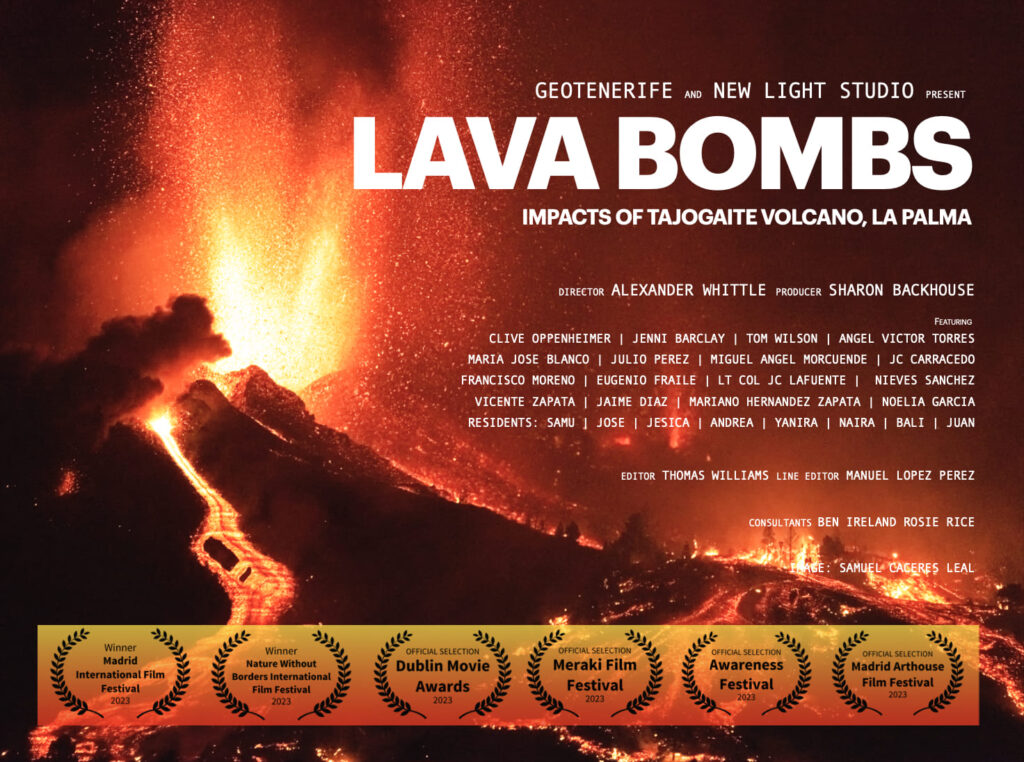
Lava Bombs: Truths Behind The Volcano recoge las impactantes historias detrás de la crisis y la respuesta a la erupción del Volcán de Tajogaite en Cumbre Vieja, La Palma, en las Islas Canarias, durante 2021. Lava Bombs revela el profundo impacto de este gran desastre a través de las voces de las personas afectadas, los gestores de emergencias, los políticos y los científicos, además de mostrar espectaculares imágenes captadas por testigos, equipos de noticias y pilotos de drones. Los temas de comunicación, confianza y errores cometidos se analizan mientras comenzamos a extraer lecciones aprendidas para futuras emergencias de todo tipo.
LB2 poster with laurels

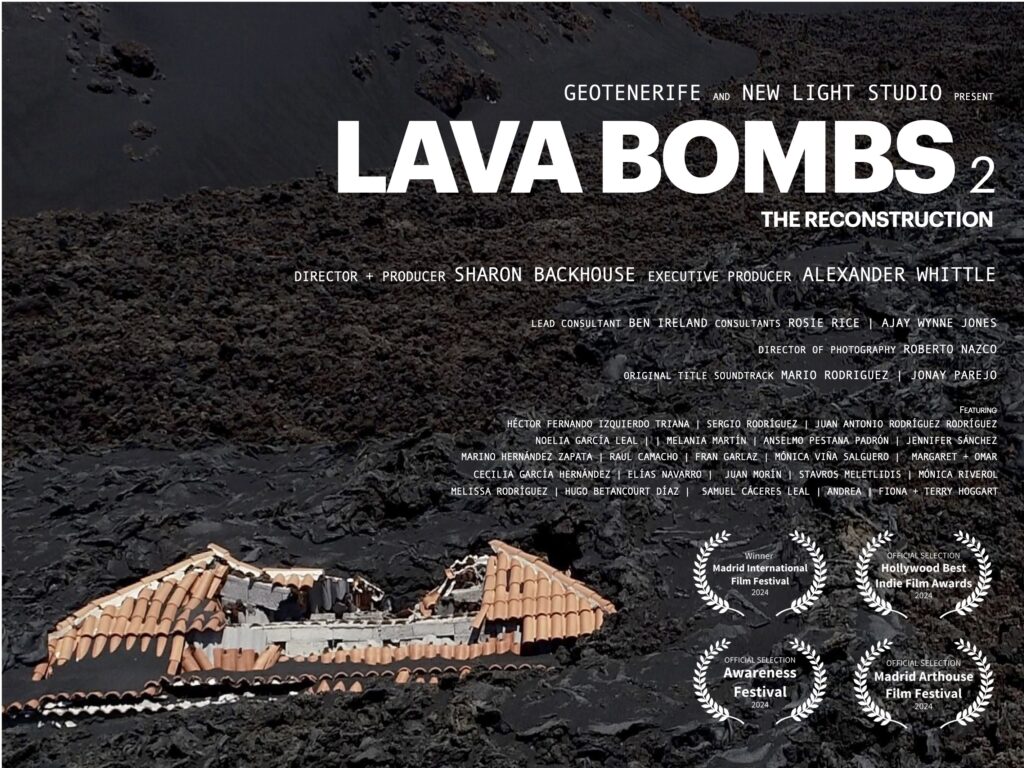
Lava Bombs: The Reconstruction  se adentra en lo que ocurre después de que finaliza la erupción más destructiva en la historia de una isla. La erupción del volcán Tajogaite acaparó titulares internacionales en 2021, pero Lava Bombs Parte 2 revela la lucha por la recuperación en esta pequeña isla en medio del Atlántico. A través de imágenes impactantes y testimonios íntimos de políticos, científicos, residentes y activistas, este nuevo documental profundiza más allá de los titulares para analizar los éxitos y fracasos de los dos años posteriores a la erupción.

EVENTOS URGENTES EN LAS ISLAS CANARIAS

Nuestro objetivo es recopilar y publicar actualizaciones, procedentes de fuentes de noticias confiables, sobre eventos urgentes en las Islas Canarias, de modo que tanto los residentes como los turistas puedan utilizar este centro de información durante una emergencia y sirva además como registro de los acontecimientos una vez que el evento haya finalizado. 

Manifestaciones contra el turismo en masa

• Resumen de los eventos clave en una línea temporal sencilla • Base de datos de la cobertura mediática y las respuestas en redes sociales • Recursos sobre por qué las fundaciones están organizando manifestaciones • Comunicados de prensa y declaraciones de GeoTenerife a los medios internacionales

Decenas de miles de residentes canarios protestaron el 20 de abril y en octubre para hacer oír sus preocupaciones sobre el turismo insostenible. Exigen la implementación de un nuevo modelo turístico que incorpore sus inquietudes y proteja su paraiso biodiverso en el Atlántico. GeoTenerife recopila a continuación recursos de noticias y redes sociales sobre esta historia en desarrollo, para que residentes, estudiantes, investigadores y periodistas puedan acceder a ella de manera abierta.
IMG_3444

Incendios forestales

El incendio forestal de Tenerife en 2023 fue el más devastador en las Islas Canarias en los últimos 40 años y el más grave en España durante 2023. El fuego afectó a casi 15.000 hectáreas, quemando el 7% de la superficie de Tenerife y causando 80,4 millones de euros en daños. El incendio ha provocado aproximadamente 12 millones de euros en daños al sector agrícola, incluyendo entre 2.500 y 3.500 colmenas destruidas. Además, más de 12.000 personas tuvieron que ser evacuadas durante el transcurso del incendio, afectándose 364 explotaciones agrícolas y 246 edificios. Hasta 60 especies protegidas podrían haberse visto impactadas por el incendio, aunque el verdadero alcance del impacto en estas especies aún se desconoce.

DIVULGACIÓN

Entrevistas

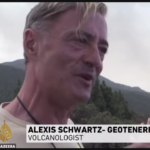
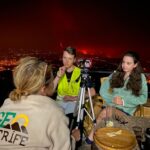
A menudo somos entrevistados por medios de comunicación locales, nacionales e internacionales para brindar información sobre actividad volcánica, incendios forestales y otros fenómenos en las Islas Canarias. Nos complace compartir nuestro conocimiento con la mayor cantidad de personas posible.

Enfoque en los residentes

Además de nuestra ciencia orientada a los residentes, gestionamos las campañas FFP2 y SamuLaPalma para apoyar a los afectados por la erupción de La Palma 2021. Asimismo, realizamos visitas escolares para fomentar la ciencia volcánica entre los jóvenes residentes canarios y hacemos que nuestros programas de prácticas estén accesibles para estudiantes que viven en las Islas Canarias, asegurando que nuestros proyectos beneficien a la población local.

Conferencias

Coorganizamos el VulcanaSymposium anual junto con el IEO y también asistimos a otras conferencias volcanológicas, como VMSG, IAVCEI y COV12, para discutir nuestros proyectos y sus resultados con expertos en ciencia volcánica, en particular sesiones de preguntas y respuestas para nuestro documental LavaBombs. Nuestro Coordinador de Contenidos de VolcanoStories fue invitado a presentar en el Lyell Geology Day de la Royal Holloway University sobre el proyecto de la línea temporal de la erupción de Tajogaite.
Collaborations

GeoTenerife está comprometido con fomentar colaboraciones valiosas con instituciones de investigación locales, nacionales e internacionales, con el fin de realizar investigaciones geocientíficas significativas en las Islas Canarias.

Siempre estamos buscando nuevas colaboraciones, por lo que si tú o tu empresa/institución de investigación estáis interesados en colaborar con nosotros, ponte en contacto a través de enquiries@geotenerife.com

Nuestros colaboradores incluyen:

  • IGN, Instituto Geográfico Nacional

  • Dra. Catalina Arguello, Psicóloga Social, Universidad Internacional de La Rioja

  • Dra. Katy Chamberlain, Volcanóloga, Universidad de Liverpool

  • Dr. Pablo González, Geofísico Volcánico, Consejo Superior de Investigaciones Científicas

  • Y muchos más colaboradores de valor.

Equipo de VolcanoStories
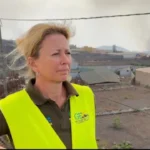
Sharon Backhouse

(Ella)

Directora de VolcanoStories, con décadas de experiencia en periodismo y productora de documentales galardonados

Ben Ireland

(Él)

Editor de VolcanoStories e investigador doctorante en teledetección de la Universidad de Bristol

Ajay Wynne Jones

(Él)

Coordinador de contenido de VolcanoStories con formación universitaria en ciencias de la tierra y el medio ambiente por la Universidad de Lancaster

Isabel Queay

(Ella / Elle)

Creadora de contenido para VolcanoStories con formación universitaria en geología por la Universidad de Glasgow

Tamsin Backhouse

(Ella)

Coordinadora de redes sociales de VolcanoStories, con formación universitaria en filología hispánica y ciencias políticas por la Universidad de Bath. 

Sergio Alfaya

(Él)

Colaborador de volcanostories,  graduado en Geografía y Ordenación del Territorio por la Universidad de La Laguna, Tenerife.

Si estuviste involucrado o fuiste afectado por la erupción de La Palma 2021 de alguna manera, nos encantaría conocer tus experiencias y opiniones. Si deseas colaborar con este trabajo, por favor visita nuestra página Contribuir.

Contribuir

El contenido de VolcanoStories está disponible de forma gratuita para estudiantes, centros educativos y académicos; todo lo que pedimos es que cites “VolcanoStories de GeoTenerife”.

Cómo citarnos

El contenido de VolcanoStories de GeoTenerife no puede ser utilizado con fines comerciales. Cualquier medio de comunicación o entidad comercial que desee utilizar alguno de los contenidos aquí incluidos debe contactarnos por escrito en primera instancia a través de enquiries@geotenerife.com. Para más detalles, consulta nuestros Términos de Uso.

Términos de uso