
Acceda a esta página en español:

VolcanoStories Blk

The VolcanoStories project by GeoTenerife is a multi-media, science communication project, creating bespoke resources about volcanic activity, preparedness,  reconstruction, and sustainable tourism in the Canary Islands. We collaborate with leading local, regional, and national institutions via our unique training programmes GeoIntern, VolcanoCamp, and MarineSciCamp for students and scholars from around the globe.

La Palma infrastructure reconstruction, struggles of the residents, and the eruption

Over-tourism protests, unsustainable resorts, and activist movements

Volcanic risk, emergency plans, communication, and preparedness in the Canary Islands.

New: Opinion Piece published on VolcanoStories

Short-form , easy-to-read, articles, which are relevant to the residents of the Canary Islands. Available en Español and in English.

Cuna del Alma, el Aula Marina, y las Tortugas

Las Islas Canarias se promocionan como un paraíso de biodiversidad y turismo sostenible. Pero la historia del Puertito de Adeje SeaLab revela una realidad muy distinta: un patrón en el que las autoridades locales explotan las iniciativas de restauración ambiental para generar relaciones públicas

Cuna del Alma, the SeaLab and the Turtles

The Canary Islands are marketing themselves as a paradise of biodiversity and sustainable tourism. But the story of the Puertito de Adeje SeaLab reveals a very different truth: a pattern in which local authorities exploit environmental restoration initiatives for public relations, only to erase them

NEW: La Palma Reconstruction Update

La Palma Reconstruction – October 2025

Canary Islands 'Volcano Law' published - Subsurface pressure tests in Puerto Naos - La Palma awarded for ISVOLCAN health project - Latest Reconstruction Statistics Published - Results from Radon exposure tests in Puerto Naos - Tajogaite Reconstruction Conference in November - LP-211 road reopens - G

La Palma Reconstruction – September 2025

Volcanic emergency drill takes place in Tenerife - New internal 'map' of Tajogaite - Marine recovery continues - Results published on health impacts of the eruption - Progress of National Volcanology Centre - 60% income tax discount delay - LP-2 reconstruction progress - Volcano Law approved by Cana

Urgent events: 18M Protest

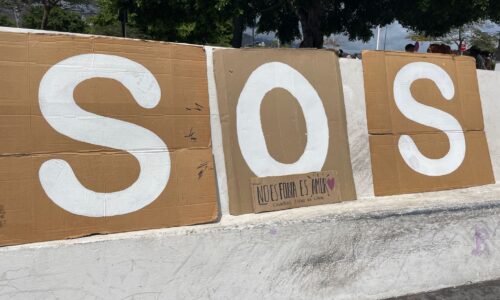
Frustrated by unchecked development and environmental degradation, 200,000 Canarians protested in April and several thousand again in October 2023, demanding a more sustainable tourism model that prioritises local needs and protects the islands’ fragile ecosystem. A third large-scale protest is being organised for May 2025 which we will be covering here on Urgent events.
WhatsApp Image 2024-04-24 at 13.12.44

Cuna del Alma, el Aula Marina, y las Tortugas

Las Islas Canarias se promocionan como un paraíso de biodiversidad y turismo sostenible. Pero la historia del Puertito de Adeje SeaLab revela una realidad muy distinta: un patrón en el que las autoridades locales explotan las iniciativas de restauración ambiental para generar relaciones públicas

Protest Coverage

NEW: El Puertito and the Cuna del Alma resort

Cuna del Alma, el Aula Marina, y las Tortugas

Las Islas Canarias se promocionan como un paraíso de biodiversidad y turismo sostenible. Pero la historia del Puertito de Adeje SeaLab revela una realidad muy distinta: un patrón en el que las autoridades locales explotan las iniciativas de restauración ambiental para generar relaciones públicas

Cuna del Alma, the SeaLab and the Turtles

The Canary Islands are marketing themselves as a paradise of biodiversity and sustainable tourism. But the story of the Puertito de Adeje SeaLab reveals a very different truth: a pattern in which local authorities exploit environmental restoration initiatives for public relations, only to erase them

Have a comment or want to ask us a question? Our forum is a space for questions, reflections and comments. 

Forum for VolcanoStories questions

Please or Register to create posts and topics.

The conversation: Hindsight is 20/20

Opinion piece

Written by Ben Ireland

PhD student in Volcanology, Bristol University and VolcanoStories Editor, GeoTenerife

In the years since the 2021 Tajogaite eruption on La Palma, volcanologists have published research identifying precursory signals for both the beginning and end of the eruption from a variety of different data sources. One recent study has even shown evidence that the reactivation of La Palma’s magmatic system occurred 10-15 years before the eruption. This has led some local commenters to question why these insights were not available and shared with the public before the eruption, and question if data has been withheld from the public. The reality is that the lack of these insights until after the eruption is because many methods used in volcanology rely on measurements that can only be taken after an eruption has begun.

Let’s explore the ‘hindcasts’ that have been made for various aspects of the eruption, and how these may be useful for future eruptions on La Palma and beyond. 

The lack of forecasting by volcanologists of various aspects of the 2021 Tajogaite eruption on La Palma, and the knock-on impacts on the population, has been the source of intense scrutiny towards scientists and scientific institutions. The communicated uncertainty over if, when, and where an eruption would begin led to a reactive plan rather than proactive evacuations. Volcanologists were unable to forecast with certainty how long the eruption would last or if it would restart, again generating considerable uncertainty amongst those affected. However, volcanologists cannot forecast eruptions with any great deal of certainty, as was the case in La Palma, except occasionally at well-monitored volcanoes that frequently erupt in consistent ways, such as the recent eruptions in Iceland. Nonetheless, the 2021 eruption was very well monitored, so in time volcanologists have been able to go back and piece together ‘hindcasts’ of signals indicating the start and end of the volcano’s reawakening, from measurements of lava, seismic signals, ground movement, and gas emissions taken after the eruption had started.

A ‘hindcast’ is an approach where scientists see if they could ‘forecast’ a natural phenomenon e.g. a volcanic eruption, after the phenomenon has happened, once they have had time to fully understand and analyse the event. These help us to identify what signs to look for to understand forecasted future events better.

However, as was the case in La Palma, volcanologists simply cannot forecast eruptions with any great deal of certainty, except very occasionally at well-monitored volcanoes that frequently erupt in consistent ways, such as the recent eruptions in Iceland starting in 2021. Nonetheless, the 2021 eruption on La Palma was sufficiently monitored that, with time, volcanologists have been able to go back and piece together ‘hindcasts’ of signals indicating the start and end of the volcano’s reawakening, from measurements of lava, seismic signals, ground movement, and gas emissions. 

Below, we will explore and summarise the academic articles relating to these hindcasts, explaining what’s new, what was hindcast, which techniques scientists used, and how these studies may be useful in the future.

What’s new?

Scientists have discovered that magma may have been silently moving under La Palma 10-15 years before the 2021 eruption, which could not be detected by their monitoring equipment.

What was measured and why?

Volcanic rocks originate in the mantle as magma and rise through the crust towards the surface where they may eventually erupt as lava. The upwards journey may involve many cycles of heating, cooling, storage in magma reservoirs, and mixing with other magmas. Rather than a traditional singular circular magma chamber, volcanologists now think of volcanic plumbing systems as extensive storage regions across a range of temperatures, depths and chemical compositions.

Lavas are made of many different minerals that are found as crystals in the rock. The crystals of each mineral will have different chemical make-ups, different shapes and sizes, and abundances in a given lava. Each of these crystals preferentially form at different pressures and temperatures beneath the Earth’s surface, and by analysing the abundance, size, and shape of crystals in a lava, volcanologists can reconstruct its journey and infer when and where different processes occurred. This particular study analyses samples from three of the 2021 lava flows to perform high-temperature experiments on them to do this.

What do the results show?

  1. Over the 10-15 years before the eruption, new magma was injected from the mantle into the shallow magma reservoir at around 10 km depth.

  2. Unusually, no earthquakes were associated with these events, which suggests there was already an established connection between the mantle and shallow magma reservoir, and the new magma did not have to force apart any new rocks.

During the eruption, the crustal reservoir emptied by the 27th September, after this date it was recharged by hotter and more fluid magmas from the mantle, explaining the pause and change in style of the eruption after this date.

What’s new?

Scientists used seismic signals to track changes in the subsurface as magma rose prior to the 2021 eruption.

What was measured and why?

As well as typical earthquakes, seismometers can also record continuous very low magnitude signals from background noise, known as ambient noise, from ocean waves and other sources. Seismic waves from ambient noise sources will record information about the layers of the subsurface they travel through, normally in the top few km of the crust. If you measure ambient noise signals across multiple seismometers in an area, with detailed analysis you can generate an image of the layers of the subsurface and how these change over time.

In volcanic eruptions, this has been used to measure changes in the subsurface through time as magma rises to the surface. Compared to solid rock, seismic waves will travel more slowly through hotter and more fluid rising magma, and this can be measured from ambient noise signals. This study applied these methods retrospectively to seismic data from 2018-2022, to see if they could identify any changes leading up to the eruption.

What do the results show?

  1. Starting on the 12th September 2021, a dramatic decrease in seismic velocity was recorded, interpreted as the rapid movement of magma towards the surface.

  2. Prior to 12th September, no changes of a similar magnitude had been recorded.

  3. Whilst this technique was applied retrospectively, there is potential to apply it in future in near-real-time, where it could serve as a valuable volcano monitoring tool.

What’s new? 

Scientists used measurements of ground movement to forecast when the 2021 eruption may end.

What was measured and why?

GNSS stations record the movement of the ground caused by a range of processes. In volcanic areas, the volcanic processes may cause the ground around the volcano to inflate or deflate. These movements are on the order of centimetres, and are often caused by changes in pressure in a magmatic system, causing uplift or subsidence of the ground, respectively. A ‘classical’ but oversimplified cycle for ground movement at volcanoes begins with uplift preceding the eruption until the pressure overcomes the strength of the surrounding rock, causing an eruption. The eruption of material from a magma reservoir reduces the pressure causing subsidence during an eruption, and after the eruption, uplift may begin again if new magma is being pumped into the reservoir.

This study characterises GNSS data showing subsidence throughout the eruption. The subsidence trend was faster at first before slowing to nearly no subsidence by the end of the eruption. The study fit this slowing subsidence trend with a best-fit curve, measuring where the curve levelled off and taking this as an estimate for the end of the eruption. They started with deformation data for the whole eruption, before removing the deformation data from the end of the eruption bit by bit and repeating the study, to see how many days of deformation data they need to get a good estimate of the end date of the eruption.

What do the results show?

  1. This approach was applied during the eruption and provided an accurate forecast of the end of the eruption, but it was too uncertain to be used by authorities during the eruption.

  2. Hindcasts completed after the eruption were accurate and less uncertain, and became more accurate and less uncertain throughout the eruption as more days of GNSS time series data became available.

  3. From around 47 days into the 85-day eruption, the estimates of eruption length from hindcasts became stable and accurate.

  4. For eruptions meeting certain criteria that means this method can be used; forecasts of the end of an eruption may be possible at future eruptions in La Palma and elsewhere.

What’s new?

Scientists use satellite gas measurements to determine when the 2021 eruption was going to end.

What was measured and why?

During a volcanic eruption, gas emissions into the atmosphere, similar to ground movement in the previous example, can be indicative of the pressure in a magmatic system. If an eruption is driven simply by the draining of a magma chamber, such as in La Palma, gas emissions would be expected to reduce throughout the eruption until it stops. A widely used way of measuring volcanic gas emissions is by measuring sulphur dioxide (SO2) in the atmosphere using satellites, as SO2 is easier to detect than other volcanic gases.

This study collected SO2 emission data throughout the 2021 Tajogaite eruption and attempted to use the decay (decrease throughout time) in SO2 emissions to hindcast the end of the eruption. They also attempted to determine what emissions-based threshold could be used to best forecast the end of the eruption.

What do the results show?

  1. They could hindcast the approximate end date of the eruption from SO2 emissions data from as early as the 20th October, with the uncertainty decreasing the as data from more of the eruption as added. For this, they assumed the eruption was over when the gas emissions dropped to 6% of the peak gas emissions at the start of the eruption,

  2. This approach could be used in near-real-time during future eruptions to forecast the end of an eruption, provided the SO2 emissions reduce with time in a similar way to the La Palma eruption.

  3. The threshold of 6% used was the best performing out of the values tested (2-10%), but this may be different for future eruptions.

The 2021 eruption in La Palma was monitored using innovative techniques and equipment, which have since provided scientists valuable insights into the eruption, including accurately hindcasting when the eruption would end, which would not have been possible to do during the crisis. These advances could improve the ability of monitoring agencies to forecast key events—such as when an eruption might end—in the future. However, in the race to publish findings, many local residents felt that important information had been withheld from them, as they believed this information was “known beforehand”. Moving forward, it is crucial to prioritise effective communication alongside scientific research. Well-monitored eruptions such as this one become hotbeds for new scientific techniques and understanding, but communities may not see these benefits if efforts are not made by scientists to communicate them. By ensuring that local communities understand and benefit from scientific findings, we can strengthen both volcanic resilience and public trust.

Published articles and Opinion pieces

Our published work, posters and presentations at conferences can be accessed below through GeoTenerife’s VolcanoStories ResearchGate:

THE COMMUNICATION AND INFORMATION PROCESS DURING THE LA PALMA ERUPTION ERRORS, SUCCESSES, LEARNINGS AND PROPOSALS FOR IMPROVEMENT

After nearly fifty years without showing obvious signs of volcanic activity on the surface, in 2021 there was a new eruption in the area known as Cabeza de Vaca in La Palma (Canary Islands, Spain). The eruption lasted eighty-five days and caused numerous losses due to the extensive area affected by

We aim to use our project to publish short-form articles, which are easy to read, and relevant to residents, especially La Palma’s reconstruction, volcanic readiness, and tourism practices in the Canary Islands. Available en Español and in English.

Cuna del Alma, el Aula Marina, y las Tortugas

Las Islas Canarias se promocionan como un paraíso de biodiversidad y turismo sostenible. Pero la historia del Puertito de Adeje SeaLab revela una realidad muy distinta: un patrón en el que las autoridades locales explotan las iniciativas de restauración ambiental para generar relaciones públicas

Lava Bombs Project
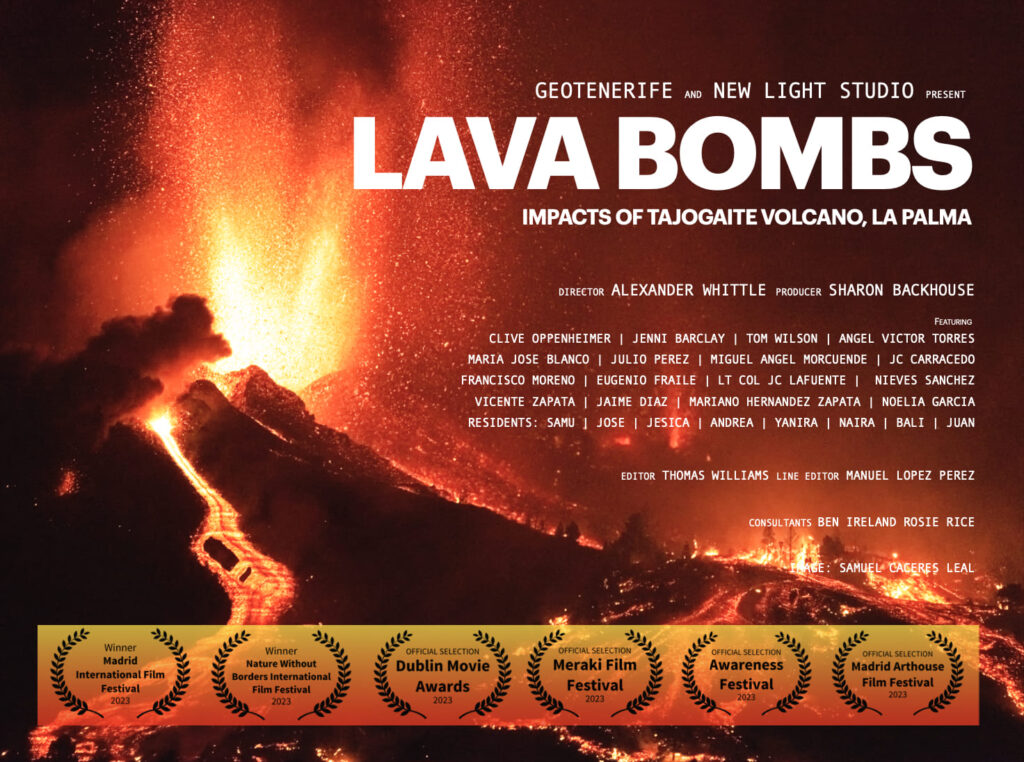
Lb1 poster screenshot (1)

Lava Bombs: Truths Behind The Volcano captures the explosive stories behind the crisis and response to the 2021 Volcán de Tajogaite eruption in Cumbre Vieja on La Palma in the Canary Islands. Lava Bombs reveals the heavy impact of this major disaster, through the voices of the affected people, emergency managers, politicians and scientists, as well as showcasing spectacular imagery captured by witnesses, news crews and drone pilots. Themes of communication, trust and missteps are analysed as we start to look towards lessons learned for future emergencies of all kinds
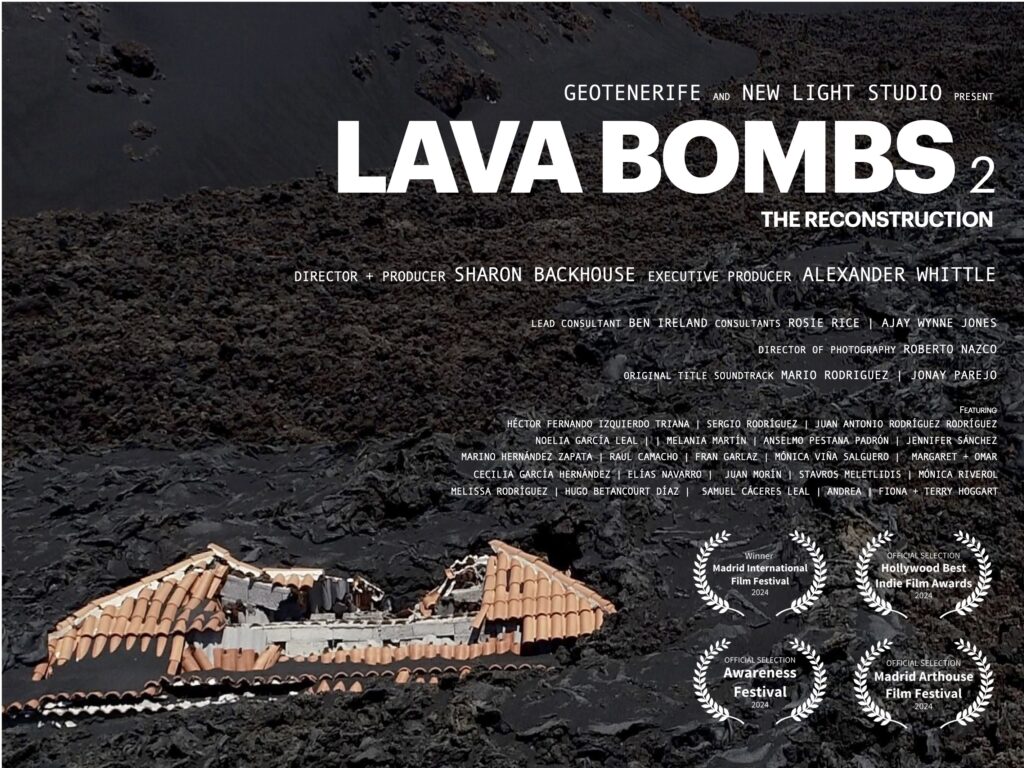
LB2 poster with laurels

Lava Bombs: The Reconstruction dives into what happens after the most destructive eruption in an island’s history ends. The eruption of the Tajogaite volcano hit international headlines in 2021, but LavaBombs Part 2 reveals the struggle to recover on this small island in the middle of the Atlantic. Through dramatic footage and intimate testimony from politicians, scientists, residents and activists this new documentary digs deep behind the headlines to unpick the successes and failures of the following two years post-eruption.

Urgent Events in the Canary Islands

We aim to collect and publish updates, from trustworthy news sources, regarding urgent events in the Canary Islands, so that residents and tourists alike can use this hub of information during an emergency and act as a record of events after the event has ended.

Demonstrations against unsustainable tourism

• Summarising key events in a simple timeline • Database of news coverage and social media responses • Resources on why the foundations are organising demonstrations • GeoTenerife's press releases and comments to the international media

Tens of thousands of Canarian residents protested on the 20th of April and October to make their concerns heard about unsustainable tourism; They want a new tourism model implemented that incorporates their concerns and protects their biodiverse paradise in the Atlantic. GeoTenerife compiles news resources and social media on this developing story below so that locals, students, researchers and journalists alike can access it openly.
Tenerife’s 2023 wildfire was the most devastating fire in the Canary Islands in the last 40 years and the most severe in Spain in 2023; The fire affected nearly 15,000 hectares, burning 7% of the surface of Tenerife, and causing 80.4 million euros of damage. The forest fire has caused approximately 12 million euros of damage to the agricultural sector, including 2,500-3,500 hives that were destroyed. In addition, it caused more than 12,000 people to have to be evacuated throughout the course of the fire, 364 farms and 246 buildings were affected. Up to 60 protected species may have been impacted by the forest fire, but the true impact on these species is not yet known.

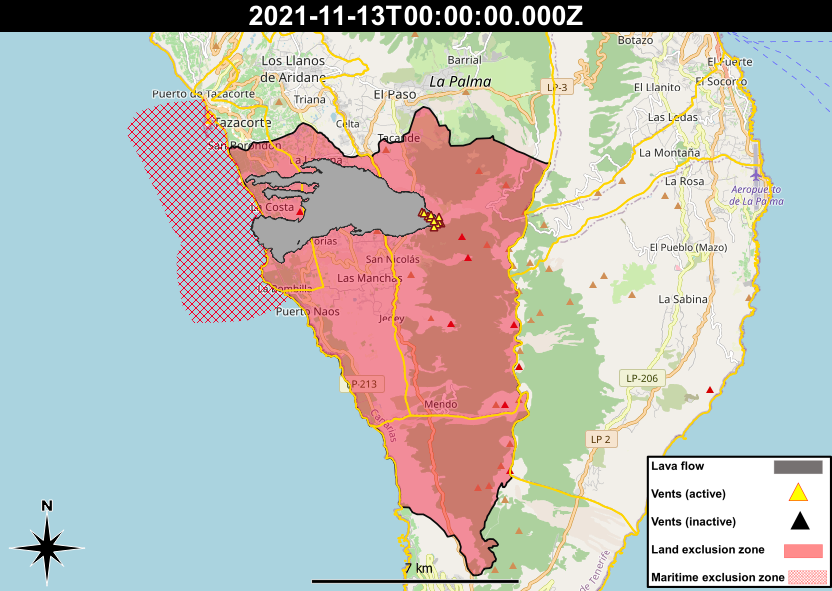
The volcanic eruption on La Palma was preceded by a seismic swarm starting on September 11th, and by September 19th the volcano, later named Tajogaite, started erupting. Over the following weeks and months, the lava flows continued to advance, encroaching over 900 hectares of land and destroying more than 1,000 buildings. The eruption was accompanied by earthquakes with magnitudes up to 5.1 mbLg, occasionally felt across multiple Canary Islands. 

Our Day-by-Day Eruption Updates from September 11th 2021 – December 25th 2021 includes:

  • Maps of lava flows, earthquakes, and exclusion zones each day
  • Summary of geological data released by IGN
  • Twitter posts made by official Canarian civil service accounts and scientists
Outreach

Interviews

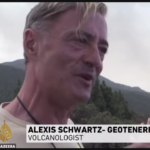
We are often interviewed by local, national, and international news sources for information about volcanic activity, forest fires, and more in the Canary Islands. We are happy to share our knowledge with as many people as possible.

Resident focus

Alongside our resident-focused science, we run the campaigns FFP2 and SamuLaPalma to support those affected by the La Palma 2021 eruption. Furthermore, we make school visits to encourage volcano science in younger Canarian Residents, and also make our internship programmes accessible to students who live in the Canary Islands to ensure our projects benefit the residents of the Canary Islands.

Conferences

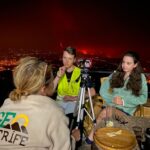
We co-organise the annual VulcanaSymposium with the IEO and also attend other volcanological conferences,  VMSG, IAVCEI, and COV12, to discuss our projects and their results with experts in the field of volcano science, in particular Q&As for our LavaBombs documentary. Our VolcanoStories Content Co-ordinator was invited to present at the Royal Holloway University Lyell Geology Day regarding the Tajogaite Eruption timeline project.
Collaborations

GeoTenerife is committed to fostering valuable collaborations with local, national, and international research institutions, to both conduct valuable geoscience research in the Canary Islands

We are always looking to welcome new collaborations, so if you or your company/research institution is interested in collaborating with us, please get in touch with us via enquiries@geotenerife.com

Our Collaborators include:

  • IGN, Instituto Geográfico Nacional
  • Dr Catalina Arguello, Social Psychologist, Universidad Internacional de La Rioja
  • Dr Katy Chamberlain, Volcanologist, Liverpool University
  • Dr Pablo Gonzalez, Volcano Geophysicist, Spanish National Research Council

and many more valued collaborators.

VolcanoStories Team

Sharon Backhouse

She/Her

VolcanoStories Director, with decades of journalism experience and producer director of award-winning documentary series.

Ben Ireland

He/Him

VolcanoStories editor and volcanic remote sensing PhD student at the University of Bristol

Ajay Wynne Jones

He/Him

VolcanoStories content co-ordinator with a background in earth and environmental science at Lancaster University

Isabel Queay

She/They

VolcanoStories content creator with a Geology background from the University of Glasgow

Tamsin Backhouse

She/Her

VolcanoStories Social media manager with a background in Spanish and politics from the University of Bath

If you were involved in or affected by the 2021 La Palma eruption in any way, we would love to hear from you about your experiences and thoughts. If you would like to contribute towards this work, please visit our Contribute page

Contribute

VolcanoStories content is freely available for students, educational establishments and academics – all we ask is that you cite “GeoTenerife’s VolcanoStories”. 

How to Cite us

GeoTenerife’s VolcanoStories content is not to be used for commercial use. Any media or commercial outlet wanting to use any content herein should contact us in writing in the first instance via enquiries@geotenerife.com. For more detail, refer to our Terms of Use.

Terms of use