
Acceda a esta página en español:

VolcanoStories Blk

The VolcanoStories project by GeoTenerife is a multi-media, science communication project, creating bespoke resources about volcanic activity, preparedness,  reconstruction, and sustainable tourism in the Canary Islands. We collaborate with leading local, regional, and national institutions via our unique training programmes GeoIntern, VolcanoCamp, and MarineSciCamp for students and scholars from around the globe.

La Palma infrastructure reconstruction, struggles of the residents, and the eruption

Over-tourism protests, unsustainable resorts, and activist movements

Volcanic risk, emergency plans, communication, and preparedness in the Canary Islands.

New: Opinion Piece published on VolcanoStories

Short-form , easy-to-read, articles, which are relevant to the residents of the Canary Islands. Available en Español and in English.

Cuna del Alma, el Aula Marina, y las Tortugas

Las Islas Canarias se promocionan como un paraíso de biodiversidad y turismo sostenible. Pero la historia del Puertito de Adeje SeaLab revela una realidad muy distinta: un patrón en el que las autoridades locales explotan las iniciativas de restauración ambiental para generar relaciones públicas

Cuna del Alma, the SeaLab and the Turtles

The Canary Islands are marketing themselves as a paradise of biodiversity and sustainable tourism. But the story of the Puertito de Adeje SeaLab reveals a very different truth: a pattern in which local authorities exploit environmental restoration initiatives for public relations, only to erase them

NEW: La Palma Reconstruction Update

La Palma Reconstruction – October 2025

Canary Islands 'Volcano Law' published - Subsurface pressure tests in Puerto Naos - La Palma awarded for ISVOLCAN health project - Latest Reconstruction Statistics Published - Results from Radon exposure tests in Puerto Naos - Tajogaite Reconstruction Conference in November - LP-211 road reopens - G

La Palma Reconstruction – September 2025

Volcanic emergency drill takes place in Tenerife - New internal 'map' of Tajogaite - Marine recovery continues - Results published on health impacts of the eruption - Progress of National Volcanology Centre - 60% income tax discount delay - LP-2 reconstruction progress - Volcano Law approved by Cana

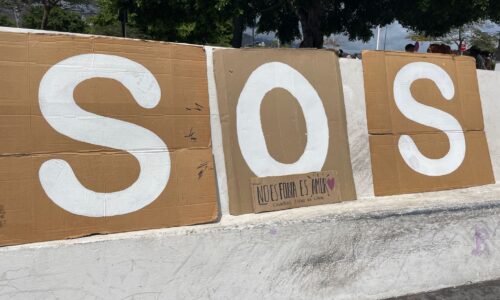
Urgent events: 18M Protest

Frustrated by unchecked development and environmental degradation, 200,000 Canarians protested in April and several thousand again in October 2023, demanding a more sustainable tourism model that prioritises local needs and protects the islands’ fragile ecosystem. A third large-scale protest is being organised for May 2025 which we will be covering here on Urgent events.
WhatsApp Image 2024-04-24 at 13.12.44

Cuna del Alma, el Aula Marina, y las Tortugas

Las Islas Canarias se promocionan como un paraíso de biodiversidad y turismo sostenible. Pero la historia del Puertito de Adeje SeaLab revela una realidad muy distinta: un patrón en el que las autoridades locales explotan las iniciativas de restauración ambiental para generar relaciones públicas

Protest Coverage

NEW: El Puertito and the Cuna del Alma resort

Cuna del Alma, el Aula Marina, y las Tortugas

Las Islas Canarias se promocionan como un paraíso de biodiversidad y turismo sostenible. Pero la historia del Puertito de Adeje SeaLab revela una realidad muy distinta: un patrón en el que las autoridades locales explotan las iniciativas de restauración ambiental para generar relaciones públicas

Cuna del Alma, the SeaLab and the Turtles

The Canary Islands are marketing themselves as a paradise of biodiversity and sustainable tourism. But the story of the Puertito de Adeje SeaLab reveals a very different truth: a pattern in which local authorities exploit environmental restoration initiatives for public relations, only to erase them

Have a comment or want to ask us a question? Our forum is a space for questions, reflections and comments. 

Forum for VolcanoStories questions

Please or Register to create posts and topics.

The conversation: Is the Spanish Government keeping its promises to La Palma?

Opinion piece

Ben Ireland, Volcanology PhD student and Lead Scientific Advisor, GeoTenerife 

In the wake of the 2021 Tajogaite eruption in La Palma, the most destructive eruption on the island in the last 500 years, many announcements on financial aid from the Spanish Government to help pay for the reconstruction were published. But four years on, it’s unclear how much money has arrived or been promised, creating further challenges and uncertainty for those affected and struggling to recover. The lack of communication and transparency over these announcements is troubling. What do we know?

With direct damage estimates of over €1 billion, with significant long-term indirect damages, the 2021 Tajogaite eruption in La Palma caused a much larger financial impact than the small island economy could bear. Even simple recovery tasks such as ash cleanup on the streets and roads cost millions of Euros.

What was said?

In December 2023, the local ruling party Coalición Canaria announced that a four-year reconstruction aid deal had been struck with the Spanish and Canarian Governments so locals could recover “the full value of what they had lost”. Kicking off in 2023, they said, it would inject €100 million per year from the Spanish Government and €50 million from the Government of the Canary Islands, earmarked for La Palma’s reconstruction projects. This, they said, would guarantee La Palma €600 million in reconstruction funds (€150 million annually) from 2023-2027. 

This was reaffirmed by an announcement by Coalición Canaria in November 2023 after the July 2023 elections in Spain, stating the €100 million would be included in the General State Budget for the next four years, under the new government. But here's the problem: the official document of the agreement, called Agenda Canaria PSOE/Coalición Canaria outlines just one single €100 million payment from the Spanish Government for the La Palma Recovery Plan, not four.

What has been paid by Madrid?

The €100 million from the Spanish government was paid in December 2023. Its aim was to help Palmeros recover the full value of the loss of their main home. Although there’s a discussion to be had about the official valuation of those homes, as of today, four years on, all bar 25 have recovered the cost of the home they lost between insurance payments, the €60,000 from the Spanish Government, €30,000 from the Canary Island Government and a “top up” from the extra €100 million sent from Madrid.

Hector Izquierdo, the Madrid government’s Special Commissioner for the Reconstruction of La Palma, told us; “the last 25 homes are taking longer to straighten out due to inheritance or other paperwork, but the money is already allocated for them so they will receive it, as long as the paperwork is resolved.”

However, the expectation locally is that the Spanish Government has yet to transfer €100 million for 2024, 2025 and 2026. This has led to numerous demands from the Associations of Affected Residents, the Cabildo de La Palma, and the Government of the Canary Islands for “the promised payments”. But Izquierdo said in May 2025 that there were “no outstanding payments of additional 100 million amounts” on the agenda..

Meanwhile, perhaps in consolation, the Canary Islands Government, who have been complying with their €50 million annual payments, have offered to extend their payments beyond 2027 if the Spanish Government does not guarantee an ongoing, yearly €100 million contribution.

“The next step is to ensure farmers recover the full value of what they lost to the lava,” Izquierdo told us. “All parties involved have agreed on a price of €44 per square metre of plantation, and €1,500 per metre of construction like water tanks and sheds. The Spanish government started to pay it in 2024, and we expect to finish these payments in the coming months. Larger operators, like Europlátano, have already recovered 50% of their plantations, but we have to work hard to help smaller farmers get back on their feet. We have paid for roads, job packages and other initiatives, but agriculture is the priority now. Six local banks are offering soft credits, and farmers who want to get started again can apply for them in the knowledge that aid is coming, but will take a little longer.”

Again, a discussion is to be had over the valuations, not just per square metre to reconstruct, but for lost revenue four years on and counting, for a true accounting of what was lost. 

And this measure has not been without controversy either - agricultural land has been offered at €44 per square metre whereas others have only been offered €20, with the Spanish Delegate in the Canary Islands, Anselmo Pestana, telling the press that expropriation will vary between €10 to €70 per square metre, depending on the circumstances. Those affected say the price differences are unfair.

Other measures

Izquierdo told us the Spanish government remains committed to a four-year, 60% reduction in income tax across La Palma to kickstart its economy following the eruption. The reduction is applied retrospectively, which can cause problems for locals. “We need to find a window to pass the legislation, but we are committed to it and it will happen,” he said. Local VAT, or IGIC, has periodically been set at 0 for La Palma in this post-eruption period and has now been extended to December 202,5 with a lack of clarity over its future application, although this is applied by the Canarian Government, not Madrid.

Second homes

Locals also lost secondary homes to the eruption. “Most of those were insured, but the difference will be made up for those that were not,” Izquierdo tells us. Again, a discussion is to be had about the official valuation of those properties and income lost for those who were renting them out. But the immediate priority, says Izquierdo, is the agricultural sector. 

Uncertainty over infrastructure aid

A final outstanding aid commitment from the Spanish Government is for the reconstruction of damaged infrastructure on the island, where they committed to paying 50% of the costs. But 50% of what…?

Initially, following the eruption, total damage was estimated at €24 million, of which the Spanish Government paid €12 million as promised in late 2022. Since then, more detailed damage assessments have significantly increased the estimated cost and thus the amount owed by the Spanish Government. In summer 2023, the total cost was increased by €12 million to €36 million, and the Spanish Government transferred an additional €6 million in August 2025. 

However, in the meantime, the Cabildo de La Palma has been re-evaluating the estimated cost of infrastructure repairs. The estimated cost has risen to €62 million, which would mean the Spanish Government owes another €13 million (paying €31 million overall).

Many different figures have been reported for the estimated cost of infrastructure damage, how it was calculated and how much the Spanish Government owes. Aside from the earlier €62 million estimate, El Día and La Rázon reported in August 2025 that the Cabildo have estimated an extra €105 million for this damage, potentially indicating La Palma is owed  €52.5 million from the Spanish Government, if the higher figure is justified. 

In June 2025, it was reported by Canal 11 that the Spanish Government owes the Cabildo de La Palma approximately €40 million for infrastructure recovery projects, as well as another €35 million to the municipalities in the Aridane Valley for similar recovery projects.

We asked Izquierdo to clarify: “For infrastructure projects, the government of Spain has already paid 50% of the cost of road and other infrastructure projects as follows: El Paso (€26.92m); Tazacorte (€9.37m); Los Llanos (€33m) and to the Cabildo (€36.70m). This summer, two new requests were made: Los Llanos (€65.66m) and the Cabildo (€105.02m) for roads not originally included”.

Complex verification procedures are required before public money is paid out: as he explained in Lava Bombs 2: The Reconstruction, Izquierdo says Madrid needs to cross-check how money is allocated and will be spent. Committing to covering 50% is not a “blank cheque”. 

A plea

As we mark the fourth anniversary of the eruption, it is important to remember that any impacts on reconstruction will be keenly felt by the residents left most vulnerable by the eruption. New elections loom on the island in 2027, and as we gear up for electioneering, all parties should exercise restraint and responsibility, communicating factually and with clarity, or this issue risks becoming a political football, adding to the uncertainty and angst of those most in need.

A prime example of this is the reconstruction of the LP2 road to reconnect the isolated town of Las Manchas across the flows. The island President, Sergio Rodríguez, promised to rebuild it. We’re told he travelled to Madrid, secured a commitment from the Central Government to fund it by paying the Cabildo directly, but the Canarian Government blocked it, saying it would set a precedent and threaten their control over large road budgets across the islands. Now political rhetoric is heating up, with politicians seeking to secure the island council again, pointing the finger at Rodríguez for “not fulfilling his promise to rebuild the road”, when they were the ones who blocked it from happening. They announce fanciful plans for a tunnel under the fresh lava flows, which we will address in a future opinion piece.

La Palma needs more money to get back on its feet, a boost to help the island generate, not stagnate. With a recognition that they not only lost homes and bananas but also income for four years, and price rises in the interim mean that the money they receive doesn’t go as far. It also needs serene heads and transparency. For that, we hope political flags and rhetoric can be put aside.

Published articles and Opinion pieces

Our published work, posters and presentations at conferences can be accessed below through GeoTenerife’s VolcanoStories ResearchGate:

THE COMMUNICATION AND INFORMATION PROCESS DURING THE LA PALMA ERUPTION ERRORS, SUCCESSES, LEARNINGS AND PROPOSALS FOR IMPROVEMENT

After nearly fifty years without showing obvious signs of volcanic activity on the surface, in 2021 there was a new eruption in the area known as Cabeza de Vaca in La Palma (Canary Islands, Spain). The eruption lasted eighty-five days and caused numerous losses due to the extensive area affected by

We aim to use our project to publish short-form articles, which are easy to read, and relevant to residents, especially La Palma’s reconstruction, volcanic readiness, and tourism practices in the Canary Islands. Available en Español and in English.

Cuna del Alma, el Aula Marina, y las Tortugas

Las Islas Canarias se promocionan como un paraíso de biodiversidad y turismo sostenible. Pero la historia del Puertito de Adeje SeaLab revela una realidad muy distinta: un patrón en el que las autoridades locales explotan las iniciativas de restauración ambiental para generar relaciones públicas

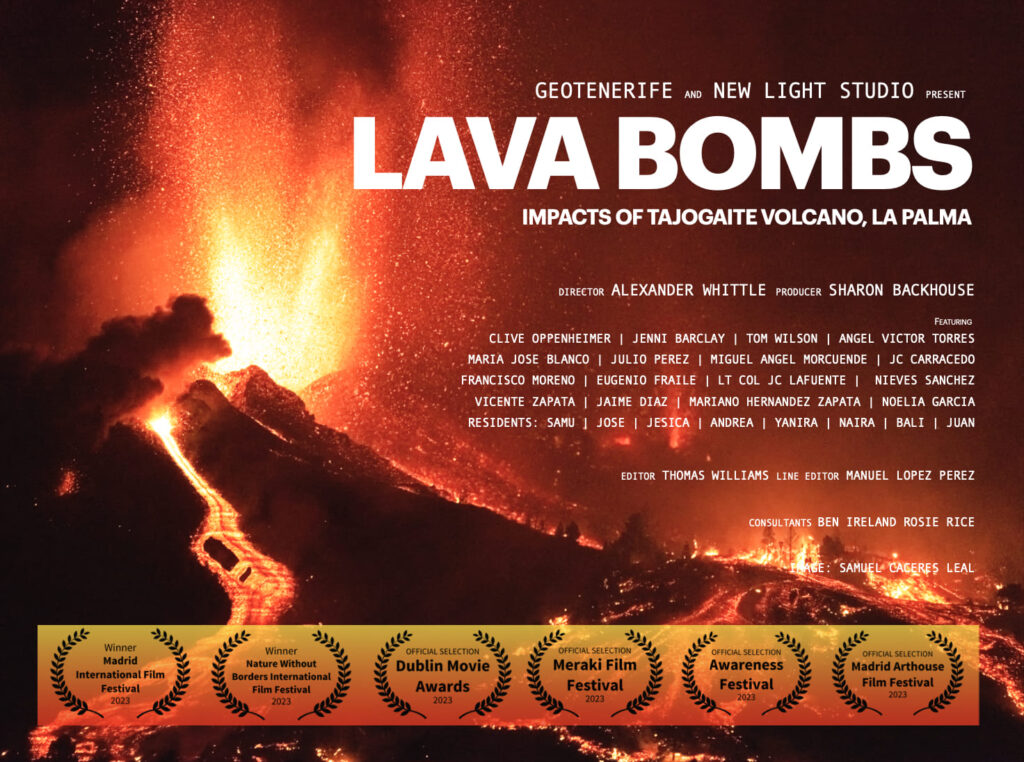
Lava Bombs Project
Lb1 poster screenshot (1)

Lava Bombs: Truths Behind The Volcano captures the explosive stories behind the crisis and response to the 2021 Volcán de Tajogaite eruption in Cumbre Vieja on La Palma in the Canary Islands. Lava Bombs reveals the heavy impact of this major disaster, through the voices of the affected people, emergency managers, politicians and scientists, as well as showcasing spectacular imagery captured by witnesses, news crews and drone pilots. Themes of communication, trust and missteps are analysed as we start to look towards lessons learned for future emergencies of all kinds
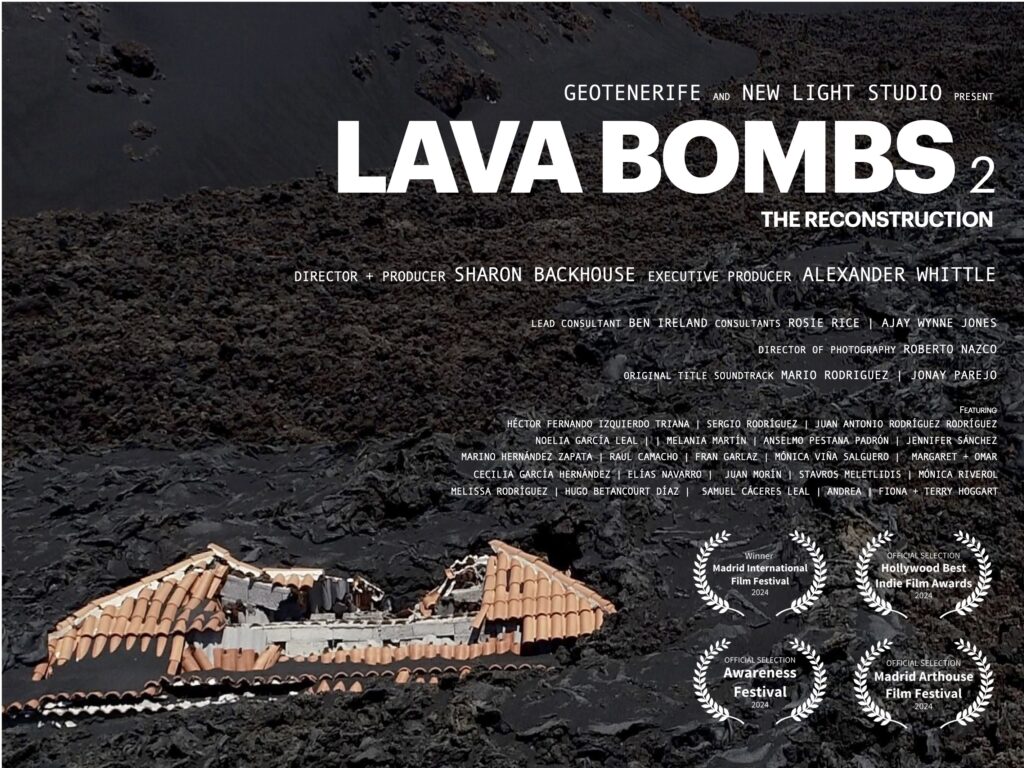
LB2 poster with laurels

Lava Bombs: The Reconstruction dives into what happens after the most destructive eruption in an island’s history ends. The eruption of the Tajogaite volcano hit international headlines in 2021, but LavaBombs Part 2 reveals the struggle to recover on this small island in the middle of the Atlantic. Through dramatic footage and intimate testimony from politicians, scientists, residents and activists this new documentary digs deep behind the headlines to unpick the successes and failures of the following two years post-eruption.

Urgent Events in the Canary Islands

We aim to collect and publish updates, from trustworthy news sources, regarding urgent events in the Canary Islands, so that residents and tourists alike can use this hub of information during an emergency and act as a record of events after the event has ended.

Demonstrations against unsustainable tourism

• Summarising key events in a simple timeline • Database of news coverage and social media responses • Resources on why the foundations are organising demonstrations • GeoTenerife's press releases and comments to the international media

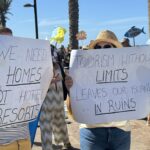
Tens of thousands of Canarian residents protested on the 20th of April and October to make their concerns heard about unsustainable tourism; They want a new tourism model implemented that incorporates their concerns and protects their biodiverse paradise in the Atlantic. GeoTenerife compiles news resources and social media on this developing story below so that locals, students, researchers and journalists alike can access it openly.
Tenerife’s 2023 wildfire was the most devastating fire in the Canary Islands in the last 40 years and the most severe in Spain in 2023; The fire affected nearly 15,000 hectares, burning 7% of the surface of Tenerife, and causing 80.4 million euros of damage. The forest fire has caused approximately 12 million euros of damage to the agricultural sector, including 2,500-3,500 hives that were destroyed. In addition, it caused more than 12,000 people to have to be evacuated throughout the course of the fire, 364 farms and 246 buildings were affected. Up to 60 protected species may have been impacted by the forest fire, but the true impact on these species is not yet known.

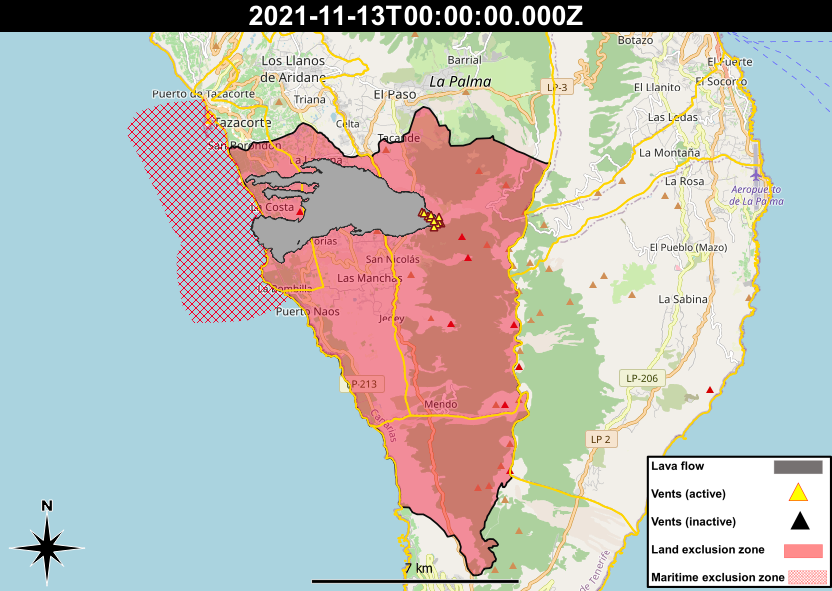
The volcanic eruption on La Palma was preceded by a seismic swarm starting on September 11th, and by September 19th the volcano, later named Tajogaite, started erupting. Over the following weeks and months, the lava flows continued to advance, encroaching over 900 hectares of land and destroying more than 1,000 buildings. The eruption was accompanied by earthquakes with magnitudes up to 5.1 mbLg, occasionally felt across multiple Canary Islands. 

Our Day-by-Day Eruption Updates from September 11th 2021 – December 25th 2021 includes:

  • Maps of lava flows, earthquakes, and exclusion zones each day
  • Summary of geological data released by IGN
  • Twitter posts made by official Canarian civil service accounts and scientists
Outreach

Interviews

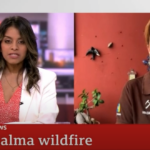
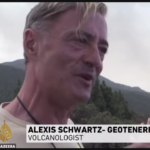
We are often interviewed by local, national, and international news sources for information about volcanic activity, forest fires, and more in the Canary Islands. We are happy to share our knowledge with as many people as possible.

Resident focus

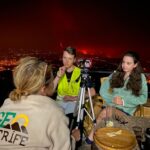
Alongside our resident-focused science, we run the campaigns FFP2 and SamuLaPalma to support those affected by the La Palma 2021 eruption. Furthermore, we make school visits to encourage volcano science in younger Canarian Residents, and also make our internship programmes accessible to students who live in the Canary Islands to ensure our projects benefit the residents of the Canary Islands.

Conferences

We co-organise the annual VulcanaSymposium with the IEO and also attend other volcanological conferences,  VMSG, IAVCEI, and COV12, to discuss our projects and their results with experts in the field of volcano science, in particular Q&As for our LavaBombs documentary. Our VolcanoStories Content Co-ordinator was invited to present at the Royal Holloway University Lyell Geology Day regarding the Tajogaite Eruption timeline project.
Collaborations

GeoTenerife is committed to fostering valuable collaborations with local, national, and international research institutions, to both conduct valuable geoscience research in the Canary Islands

We are always looking to welcome new collaborations, so if you or your company/research institution is interested in collaborating with us, please get in touch with us via enquiries@geotenerife.com

Our Collaborators include:

  • IGN, Instituto Geográfico Nacional
  • Dr Catalina Arguello, Social Psychologist, Universidad Internacional de La Rioja
  • Dr Katy Chamberlain, Volcanologist, Liverpool University
  • Dr Pablo Gonzalez, Volcano Geophysicist, Spanish National Research Council

and many more valued collaborators.

VolcanoStories Team

Sharon Backhouse

She/Her

VolcanoStories Director, with decades of journalism experience and producer director of award-winning documentary series.

Ben Ireland

He/Him

VolcanoStories editor and volcanic remote sensing PhD student at the University of Bristol

Ajay Wynne Jones

He/Him

VolcanoStories content co-ordinator with a background in earth and environmental science at Lancaster University

Isabel Queay

She/They

VolcanoStories content creator with a Geology background from the University of Glasgow

Tamsin Backhouse

She/Her

VolcanoStories Social media manager with a background in Spanish and politics from the University of Bath

If you were involved in or affected by the 2021 La Palma eruption in any way, we would love to hear from you about your experiences and thoughts. If you would like to contribute towards this work, please visit our Contribute page

Contribute

VolcanoStories content is freely available for students, educational establishments and academics – all we ask is that you cite “GeoTenerife’s VolcanoStories”. 

How to Cite us

GeoTenerife’s VolcanoStories content is not to be used for commercial use. Any media or commercial outlet wanting to use any content herein should contact us in writing in the first instance via enquiries@geotenerife.com. For more detail, refer to our Terms of Use.

Terms of use