
Acceda a esta página en español:

VolcanoStories Blk

The VolcanoStories project by GeoTenerife is a multi-media, science communication project, creating bespoke resources about volcanic activity, preparedness,  reconstruction, and sustainable tourism in the Canary Islands. We collaborate with leading local, regional, and national institutions via our unique training programmes GeoIntern, VolcanoCamp, and MarineSciCamp for students and scholars from around the globe.

La Palma infrastructure reconstruction, struggles of the residents, and the eruption

Over-tourism protests, unsustainable resorts, and activist movements

Volcanic risk, emergency plans, communication, and preparedness in the Canary Islands.

New: Opinion Piece published on VolcanoStories

Short-form , easy-to-read, articles, which are relevant to the residents of the Canary Islands. Available en Español and in English.

Cuna del Alma, el Aula Marina, y las Tortugas

Las Islas Canarias se promocionan como un paraíso de biodiversidad y turismo sostenible. Pero la historia del Puertito de Adeje SeaLab revela una realidad muy distinta: un patrón en el que las autoridades locales explotan las iniciativas de restauración ambiental para generar relaciones públicas

Cuna del Alma, the SeaLab and the Turtles

The Canary Islands are marketing themselves as a paradise of biodiversity and sustainable tourism. But the story of the Puertito de Adeje SeaLab reveals a very different truth: a pattern in which local authorities exploit environmental restoration initiatives for public relations, only to erase them

NEW: La Palma Reconstruction Update

La Palma Reconstruction – September 2025

Volcanic emergency drill takes place in Tenerife - New internal 'map' of Tajogaite - Marine recovery continues - Results published on health impacts of the eruption - Progress of National Volcanology Centre - 60% income tax discount delay - LP-2 reconstruction progress - Volcano Law approved by Cana

La Palma Reconstruction – August 2025

Military personnel involved in eruption request health monitoring - Canary Islands Government completes primary home aid payments - Controversy over 'promised' €100 million from Spain - new geothermal tenders - €6 million more from the state for reconstruction - Reconstruction agreement for La L

Urgent events: 18M Protest

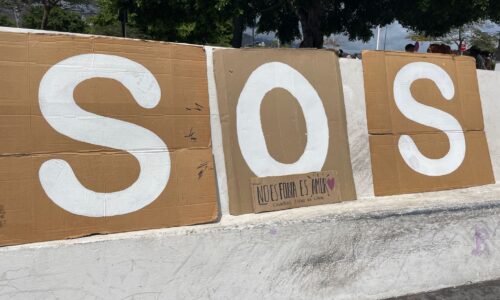
Frustrated by unchecked development and environmental degradation, 200,000 Canarians protested in April and several thousand again in October 2023, demanding a more sustainable tourism model that prioritises local needs and protects the islands’ fragile ecosystem. A third large-scale protest is being organised for May 2025 which we will be covering here on Urgent events.
WhatsApp Image 2024-04-24 at 13.12.44

Cuna del Alma, el Aula Marina, y las Tortugas

Las Islas Canarias se promocionan como un paraíso de biodiversidad y turismo sostenible. Pero la historia del Puertito de Adeje SeaLab revela una realidad muy distinta: un patrón en el que las autoridades locales explotan las iniciativas de restauración ambiental para generar relaciones públicas

Protest Coverage

NEW: El Puertito and the Cuna del Alma resort

Cuna del Alma, el Aula Marina, y las Tortugas

Las Islas Canarias se promocionan como un paraíso de biodiversidad y turismo sostenible. Pero la historia del Puertito de Adeje SeaLab revela una realidad muy distinta: un patrón en el que las autoridades locales explotan las iniciativas de restauración ambiental para generar relaciones públicas

Cuna del Alma, the SeaLab and the Turtles

The Canary Islands are marketing themselves as a paradise of biodiversity and sustainable tourism. But the story of the Puertito de Adeje SeaLab reveals a very different truth: a pattern in which local authorities exploit environmental restoration initiatives for public relations, only to erase them

Have a comment or want to ask us a question? Our forum is a space for questions, reflections and comments. 

Forum for VolcanoStories questions

Please or Register to create posts and topics.

The conversation: Netflix’s La Palma – The ethics of keeping the fictional, fictional

Opinion piece

Written by Ben Ireland

PhD candidate studying Volcanology at Bristol University and Science communicator at GeoTenerife who has been involved in studying the 2021 Tajogaite eruption and subsequent the reconstruction and activism for residents

Netflix’s disaster miniseries La Palma was released on 12 December 2024. The Norwegian production secured a spot on Netflix’s top 10 non-English series in just five weeks and was the most-watched between December 19 and 25 across all streaming platforms. However, it has received local criticism for its plot and the timing of its release, as La Palma is still recovering from the 2021 eruption on the island. It asks questions about filmmaking ethics, especially when real places and phenomena are involved.

The series follows a Norwegian family holidaying in La Palma, as volcanic unrest on the island intensifies as the whole island begins to crack in two, just out of their view.  When the volcano erupts, they must escape to the neighbouring island of Tenerife, where a purported ‘safe’ zone exists that will shelter them from the giant mega-tsunami waves when they hit. In the end, *spoilers*, they all survive by the skin of their teeth. Discounting the landslide and mega-tsunami, the majority of the remaining ‘science’ in the film poorly reflects reality, from the volcanic monitoring techniques and explanations, to the climate change reference for the worsening of the ‘crack’ on the island, to the fact that someone could survive a mega-tsunami impact in half a submerged plane fuselage! 

Neflix’s La Palma, and the  massive eruption, landslide and ‘mega-tsunami’ on the island portrayed, is completely fictional, as pointed out by local volcanologists at the Spanish National Geographic Institute, IGN. To a geoscientist, that is obvious. Many aspects of this apocalyptic scenario on La Palma, which emerged and was popularised in the early 2000s, have subsequently been debunked by scientists across many disciplines, including the US Geological Survey. This is especially true for its most far-reaching impacts, that would have allegedly seen waves of up to 25 m high along the east coast of the Americas. However, perhaps because of its scale and notoriety, the idea remains of a ‘mega-tsunami’ in the mainstream conscience and has become a thorn in the side of many residents and authorities on La Palma. 

La Palma presents itself in a fairly serious, matter-of-fact way; Opening with a clip of a professional-looking documentary footage complete with a scientist (who happens to be the author of the original Mega-tsunami study and also the BBC documentary) priming the audience with a summary of the debunked "hypothesis' of how the mega-tsunami will happen and how terrible the impacts will be. 

After the 2000 BBC Documentary Mega-tsunami: Wave of Destruction popularised the theory, there were reports of tourist numbers dropping, flights being cancelled and even foreign nationals selling their homes on La Palma and moving away. More recently during the recent 2021 Tajogaite eruption on La Palma, scientists on the island were inundated with distressed messages from concerned citizens outside the Canary Islands as far away as the USA. Already since the miniseries’ release, volcanologists have felt compelled to once again reiterate that this 'Mega-tsunami' theory has been debunked given how damaging it has been in the past. In this climate, serious ethical questions should be raised as to why a drama profiting from this fear and controversy should be commissioned and aired, and the knock-on effects it could have for the island.

Entertainment media does not exist in a societal vacuum, and there is a strong element of social responsibility and ethics, especially when covering real places and referencing real events, and a failure to consider this can directly impact people and places. Another element of this in the case of La Palma is that despite being completely fictional, the series inextricably links itself to reality and the 2021 eruption in La Palma. There are frequent verbal references to the 2021 eruption, all the non-CGI footage of the volcano and lava flows comes directly from the 2021 eruption and the associated volcanic cones, and even some of the news footage of the fictional eruption is taken directly from reporting on the 2021 event. To the average viewer, the drama risks implicitly linking the mega-tsunami theory with scientific reality on La Palma, sowing seeds for a repeat of the fallout from the 2000 BBC documentary, with the social and financial impacts from tourism losses.

Obviously, stretching scientific truth and the use of fictional apocalyptic scenarios is commonplace in the disaster media genre, and on its own is not particularly damaging or unethical. However, the context that these productions are grounded in is key to the ethics and sensitivities behind how accurately relevant science and scenarios should be portrayed. In productions grounded in real contexts and places such as La Palma, especially given the notoriety of the mega-tsunami theory and the well-documented and referenced 2021 eruption, getting the scientific facts right is necessary as to not risk misinforming the audience. 

The science in La Palma largely gives the impression that the volcanologists can ‘predict’ all sorts of things from instantaneous gas ‘emissions’, the style of the eruption (ash or lava) based on all sorts of different signals, and even the eruption itself. Not only are the referenced tools and measurements all wrong for the ‘predictions’ they are used to make, but the very notion of ‘predicting’ a volcanic eruption is misleading. In a similar way to the weather, volcanologists cannot predict eruptions, but in some cases, they can forecast them over a period of days, weeks or months, with significant uncertainties. This distinction between predicting and forecasting is especially important on La Palma, where perhaps the biggest controversy of the 2021 eruption centres around the lack of evacuations and alert level increase prior to the eruption, and if the scientists could have known the eruption was ‘imminent’. There is still a move on the island to condemn the authorities for the lack of warning, and it would not be the first time scientists have faced consequences for not ‘predicting’ geohazards.

The final element of the miniseries that raises ethical questions is the timing of its release. La Palma is still only very slowly recovering from the 2021 eruption, in which over 1,300 homes were destroyed and over €1 billion in damage was caused. Three years on from the eruption, there are many living in precarious circumstances or who have yet to receive state aid for their destroyed homes. Around 30% of tourist beds have been lost, and flights are being cancelled as tourism has fallen well below pre-eruption levels.

The continuing struggles on the island to recover after the 2021 eruption, the most destructive in over 500 years, have been well documented by many including myself and colleagues at GeoTenerife through the #VolcanoStories project and Lava Bombs documentaries.  La Palma is an incredible tourist destination, known as La Isla Bonita (The Beautiful Island) for a reason, specialising in natural scenery and local experiences, but now more than ever requires a tourism boost that can help further its recovery, rather than a series which may do more harm than good in that respect. The producers claim that the series will promote La Palma and business groups are in support, although the negative responses from local citizen groups show those affected strongly disagree with the series’ publication. Multiple comments from locals on social media quip that the only good thing about the series are the island’s beautiful landscapes.

There are lessons to be learnt here regarding the ethics of disaster filmmaking. As a scientist, my favourite types of disaster films are (predictably) those that get the science right, as well as being engaging and focus on both the human and physical sides to disaster. The brilliant In the Path of a Killer Volcano, following the 1991 eruption of Mt Pinatubo comes to mind. However, there is also equally space for ‘what-if’ films that thrive on morbid curiosity, throwing out the scientific rulebook, such as 2012, GeoStorm, and others. Where films such as La Palma try to tread the line between these endmembers, especially where they have a local context or sensitivities around certain disasters, it becomes very difficult to avoid a degree of scientific misinformation. When this misinformation could directly impact local communities, the production of such a film becomes unethical. 

"When this misinformation could directly impact local communities, the production of such a film becomes unethical." Ben Ireland 

As others have argued, one opportunity is to work alongside scientists to help get the science right. Additionally, many dramatic, inspirational and most importantly true stories have emerged from the 2021 eruption on La Palma, and one of the best ways to promote the island’s recovery through film could be to focus on these, moving well on from using damaging, fear-driven scenarios to attract audiences. GeoTenerife’s award-winning Lava Bombs documentaries aim to do just that, with ethical filmmaking principles considered throughout.

From the makers of the award-winning documentary Lava Bombs: Truths Behind the Volcano, Lava Bombs 2: The Reconstruction dives into what happens after the most destructive eruption in an island’s history ends. Lava Bombs 2: The Reconstruction, Winner at the Madrid International Film Festival; finalist at the London Director Awards and officially selected for the Hollywood Best Indie Film Awards, Awareness Festival, and Madrid Arthouse Film Festival, has now been released on several platforms.

Published articles and Opinion pieces

Our published work, posters and presentations at conferences can be accessed below through GeoTenerife’s VolcanoStories ResearchGate:

THE COMMUNICATION AND INFORMATION PROCESS DURING THE LA PALMA ERUPTION ERRORS, SUCCESSES, LEARNINGS AND PROPOSALS FOR IMPROVEMENT

After nearly fifty years without showing obvious signs of volcanic activity on the surface, in 2021 there was a new eruption in the area known as Cabeza de Vaca in La Palma (Canary Islands, Spain). The eruption lasted eighty-five days and caused numerous losses due to the extensive area affected by

We aim to use our project to publish short-form articles, which are easy to read, and relevant to residents, especially La Palma’s reconstruction, volcanic readiness, and tourism practices in the Canary Islands. Available en Español and in English.

Cuna del Alma, el Aula Marina, y las Tortugas

Las Islas Canarias se promocionan como un paraíso de biodiversidad y turismo sostenible. Pero la historia del Puertito de Adeje SeaLab revela una realidad muy distinta: un patrón en el que las autoridades locales explotan las iniciativas de restauración ambiental para generar relaciones públicas

Lava Bombs Project
Lb1 poster screenshot (1)

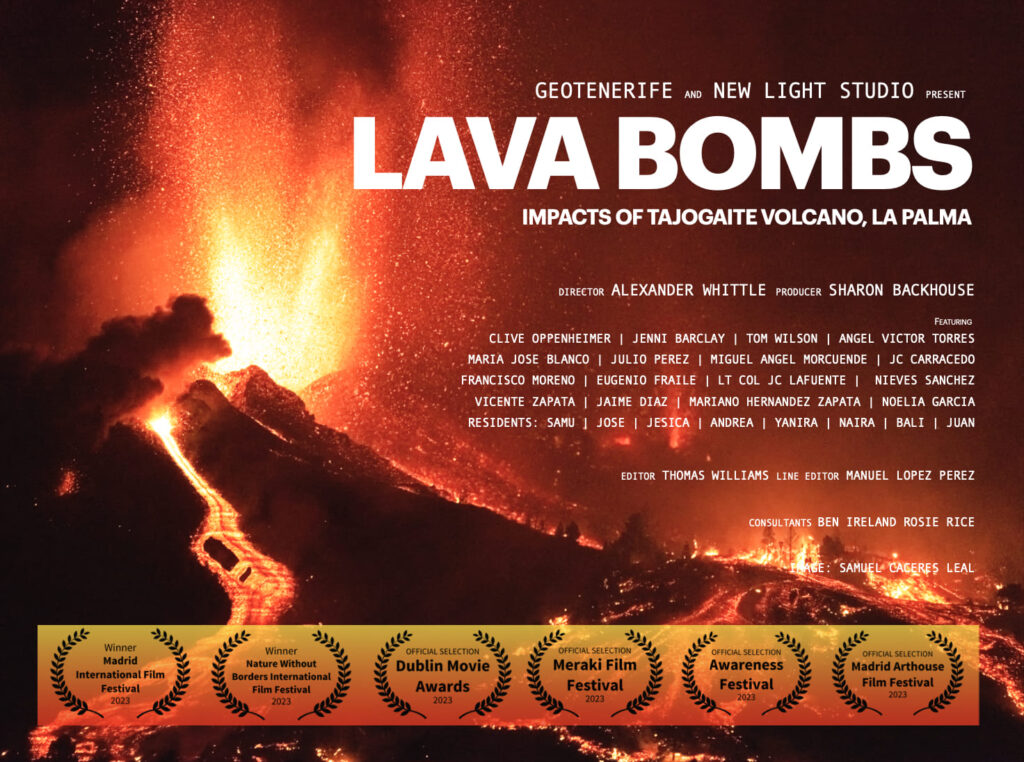
Lava Bombs: Truths Behind The Volcano captures the explosive stories behind the crisis and response to the 2021 Volcán de Tajogaite eruption in Cumbre Vieja on La Palma in the Canary Islands. Lava Bombs reveals the heavy impact of this major disaster, through the voices of the affected people, emergency managers, politicians and scientists, as well as showcasing spectacular imagery captured by witnesses, news crews and drone pilots. Themes of communication, trust and missteps are analysed as we start to look towards lessons learned for future emergencies of all kinds
LB2 poster with laurels

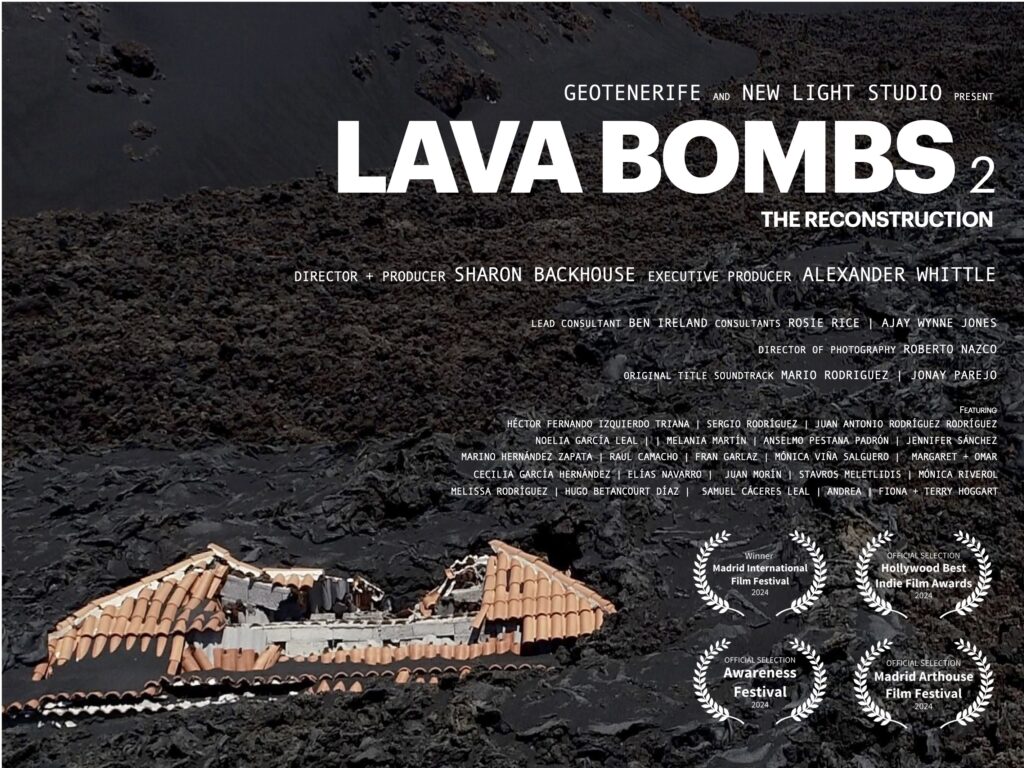
Lava Bombs: The Reconstruction dives into what happens after the most destructive eruption in an island’s history ends. The eruption of the Tajogaite volcano hit international headlines in 2021, but LavaBombs Part 2 reveals the struggle to recover on this small island in the middle of the Atlantic. Through dramatic footage and intimate testimony from politicians, scientists, residents and activists this new documentary digs deep behind the headlines to unpick the successes and failures of the following two years post-eruption.

Urgent Events in the Canary Islands

We aim to collect and publish updates, from trustworthy news sources, regarding urgent events in the Canary Islands, so that residents and tourists alike can use this hub of information during an emergency and act as a record of events after the event has ended.

Demonstrations against unsustainable tourism

• Summarising key events in a simple timeline • Database of news coverage and social media responses • Resources on why the foundations are organising demonstrations • GeoTenerife's press releases and comments to the international media

Tens of thousands of Canarian residents protested on the 20th of April and October to make their concerns heard about unsustainable tourism; They want a new tourism model implemented that incorporates their concerns and protects their biodiverse paradise in the Atlantic. GeoTenerife compiles news resources and social media on this developing story below so that locals, students, researchers and journalists alike can access it openly.
Tenerife’s 2023 wildfire was the most devastating fire in the Canary Islands in the last 40 years and the most severe in Spain in 2023; The fire affected nearly 15,000 hectares, burning 7% of the surface of Tenerife, and causing 80.4 million euros of damage. The forest fire has caused approximately 12 million euros of damage to the agricultural sector, including 2,500-3,500 hives that were destroyed. In addition, it caused more than 12,000 people to have to be evacuated throughout the course of the fire, 364 farms and 246 buildings were affected. Up to 60 protected species may have been impacted by the forest fire, but the true impact on these species is not yet known.

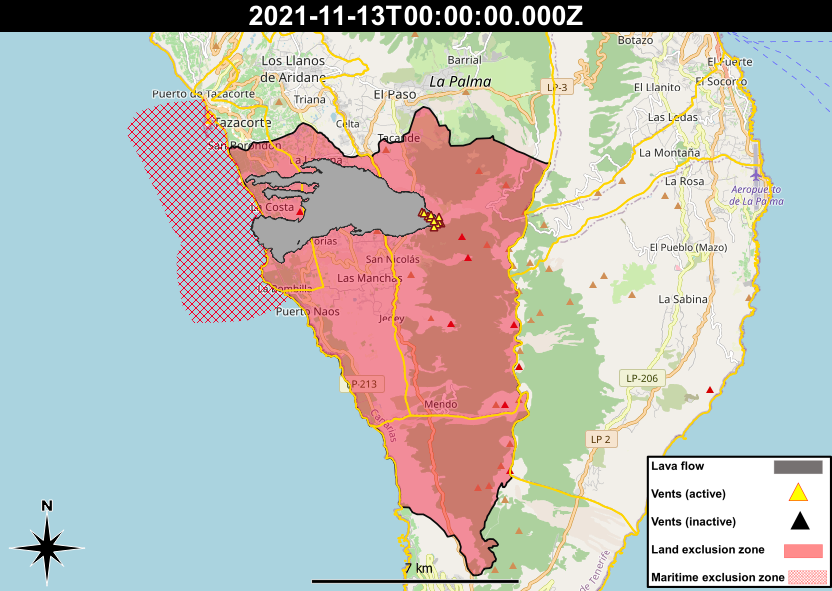
The volcanic eruption on La Palma was preceded by a seismic swarm starting on September 11th, and by September 19th the volcano, later named Tajogaite, started erupting. Over the following weeks and months, the lava flows continued to advance, encroaching over 900 hectares of land and destroying more than 1,000 buildings. The eruption was accompanied by earthquakes with magnitudes up to 5.1 mbLg, occasionally felt across multiple Canary Islands. 

Our Day-by-Day Eruption Updates from September 11th 2021 – December 25th 2021 includes:

  • Maps of lava flows, earthquakes, and exclusion zones each day
  • Summary of geological data released by IGN
  • Twitter posts made by official Canarian civil service accounts and scientists
Outreach

Interviews

We are often interviewed by local, national, and international news sources for information about volcanic activity, forest fires, and more in the Canary Islands. We are happy to share our knowledge with as many people as possible.

Resident focus

Alongside our resident-focused science, we run the campaigns FFP2 and SamuLaPalma to support those affected by the La Palma 2021 eruption. Furthermore, we make school visits to encourage volcano science in younger Canarian Residents, and also make our internship programmes accessible to students who live in the Canary Islands to ensure our projects benefit the residents of the Canary Islands.

Conferences

We co-organise the annual VulcanaSymposium with the IEO and also attend other volcanological conferences,  VMSG, IAVCEI, and COV12, to discuss our projects and their results with experts in the field of volcano science, in particular Q&As for our LavaBombs documentary. Our VolcanoStories Content Co-ordinator was invited to present at the Royal Holloway University Lyell Geology Day regarding the Tajogaite Eruption timeline project.
Collaborations

GeoTenerife is committed to fostering valuable collaborations with local, national, and international research institutions, to both conduct valuable geoscience research in the Canary Islands

We are always looking to welcome new collaborations, so if you or your company/research institution is interested in collaborating with us, please get in touch with us via enquiries@geotenerife.com

Our Collaborators include:

  • IGN, Instituto Geográfico Nacional
  • Dr Catalina Arguello, Social Psychologist, Universidad Internacional de La Rioja
  • Dr Katy Chamberlain, Volcanologist, Liverpool University
  • Dr Pablo Gonzalez, Volcano Geophysicist, Spanish National Research Council

and many more valued collaborators.

VolcanoStories Team

Sharon Backhouse

She/Her

VolcanoStories Director, with decades of journalism experience and producer director of award-winning documentary series.

Ben Ireland

He/Him

VolcanoStories editor and volcanic remote sensing PhD student at the University of Bristol

Ajay Wynne Jones

He/Him

VolcanoStories content co-ordinator with a background in earth and environmental science at Lancaster University

Isabel Queay

She/They

VolcanoStories content creator with a Geology background from the University of Glasgow

Tamsin Backhouse

She/Her

VolcanoStories Social media manager with a background in Spanish and politics from the University of Bath

If you were involved in or affected by the 2021 La Palma eruption in any way, we would love to hear from you about your experiences and thoughts. If you would like to contribute towards this work, please visit our Contribute page

Contribute

VolcanoStories content is freely available for students, educational establishments and academics – all we ask is that you cite “GeoTenerife’s VolcanoStories”. 

How to Cite us

GeoTenerife’s VolcanoStories content is not to be used for commercial use. Any media or commercial outlet wanting to use any content herein should contact us in writing in the first instance via enquiries@geotenerife.com. For more detail, refer to our Terms of Use.

Terms of use